


I keep returning to Central Mexico for one reason: it delivers wildly different weekends without the long-haul logistics. In a single sweep out of Mexico City you can bounce from a baroque food capital to a lakeside pine forest, soak in thermal rivers in a canyon, or climb up to a pyramid above a town that still feels like a village once the day-trippers leave.
This guide is built around places I’ve genuinely visited and would revisit, plus fresh, real-world research on the details travelers need right now to choose between them: how long it takes to get there, what’s currently open, what costs money (and what doesn’t), and where crowds are likely to change the vibe. I’ve also included a few Tlaxcala picks that pair perfectly with Puebla and Cholula, even if you’re trying to keep your itinerary slow and simple.
How I Choose A Central Mexico Escape (And How You Should, Too)
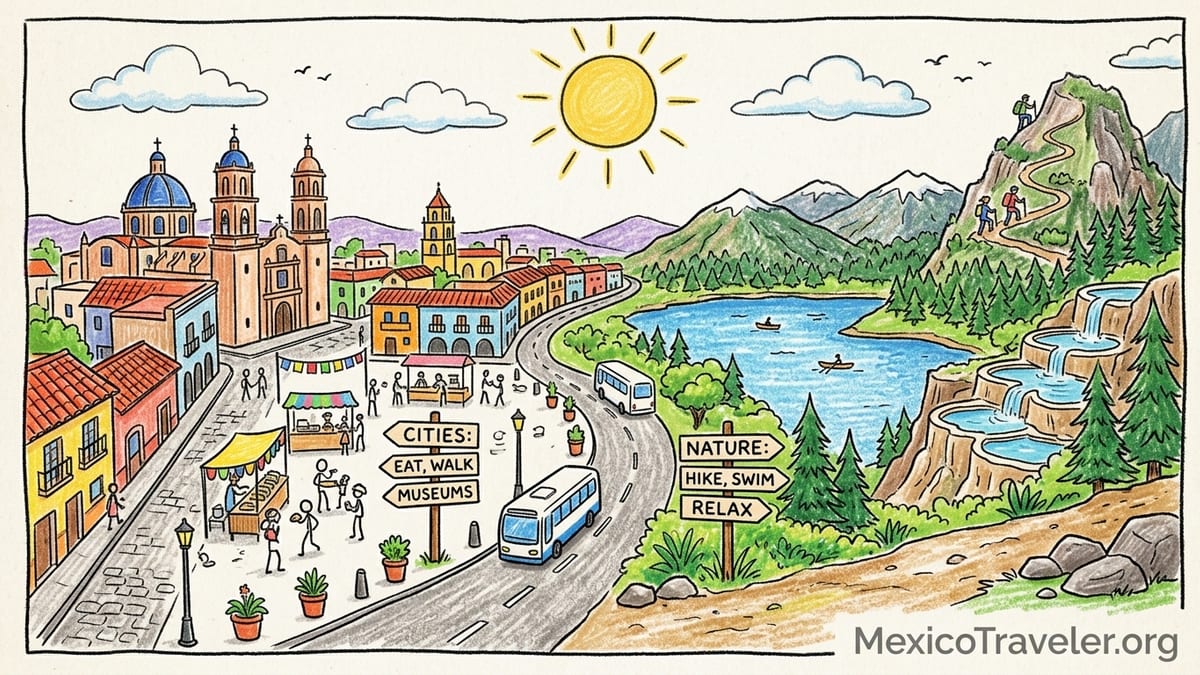
When I’m deciding where to go, I start with one practical question: do I want a “walk-and-eat” city, or a “move-your-body” nature trip? Central Mexico does both extremely well, but the rhythm of your days changes depending on which you pick. Puebla and Querétaro are the easiest for long, satisfying walks punctuated by churches, plazas, and meals. Valle de Bravo, Tepoztlán, and Tolantongo are where I go when I want trail time, lake air, thermal water, or that end-of-day tiredness that feels earned.
The second question is how you’re traveling. If you’re bus-first, the region is unusually friendly: Mexico City’s big terminals connect directly to the major hubs, and it’s realistic to plan around a Friday departure and a Sunday return. For Puebla, ADO markets the ride as roughly two hours from Mexico City’s TAPO terminal (and also runs from the airport to Puebla). For Tepoztlán, the common public-transit play is still the Southern bus terminal at Taxqueña, then a local taxi or walk into town. For Valle de Bravo, you’ll see routes tied to Mexico City’s western side (Observatorio area), with multiple departures and a drive that’s often around two to three hours depending on traffic.
Finally, I decide what I want my “headline moment” to be. For food, it’s Puebla. For couples who want a romantic setting without a mega-resort feel, it’s Valle de Bravo. For history with a clean, calm city center, it’s Querétaro. For thermal water that feels like a natural wonder, it’s Grutas de Tolantongo. Once you pick your headline, the rest of the itinerary becomes easy: you can build mornings around markets and museums, then leave afternoons for viewpoints, cafés, and long dinners.