


I used to treat Mexico City like a magnet: no matter how far I wandered, I’d snap back to the capital to sleep. It felt practical, until I did the math at 9 p.m. in a tollbooth line, exhausted, staring down another early start. Central Mexico rewards travelers who choose smart bases, and those choices are rarely cheap ones. The “expensive” decision isn’t always the nightly rate. It’s the decision to stop commuting, stop day-tripping, and start waking up where you actually want to be.
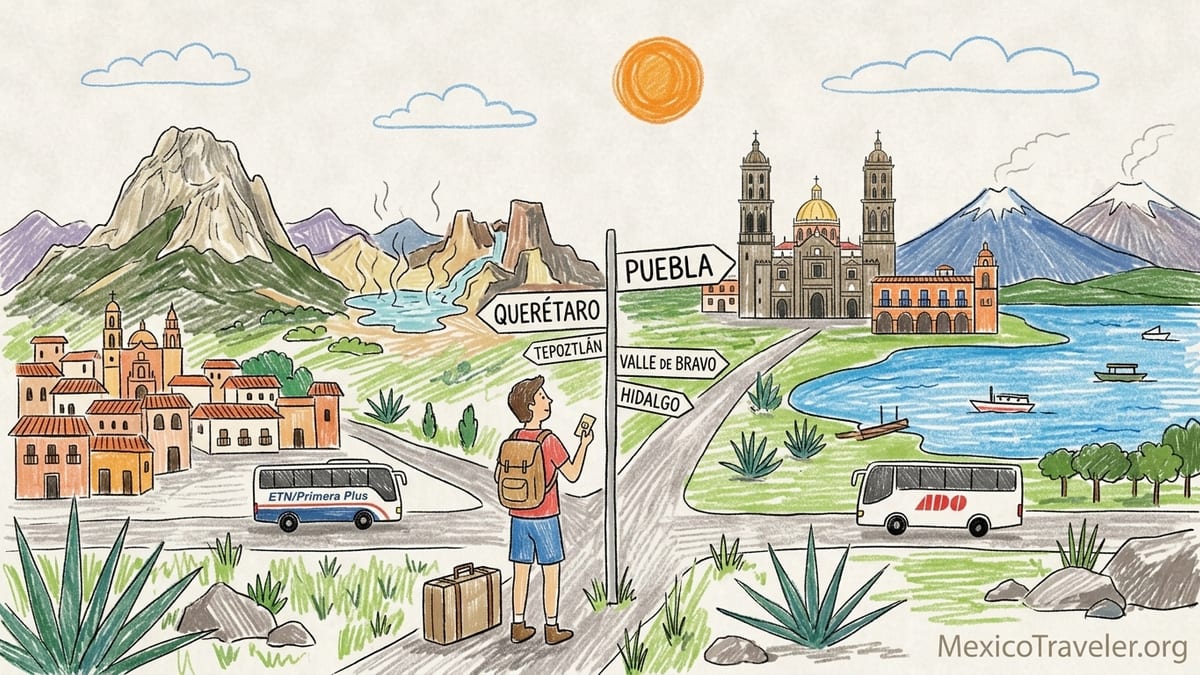
How I Chose My Bases: Paying for Time, Not Just a Room
On this loop through Central Mexico, I made myself choose bases the way I pick flights: by total travel cost. I looked at transfer times, what I could do on foot after dinner, whether I’d need paid parking, and whether weekend pricing would spike so hard I’d resent the bill. Only then did I choose where to sleep.
Recent hotel supply is strong across these regions, especially in historic centers and Pueblo Mágico towns, but the pricing patterns are not subtle. Weekends in the classic escape valves from Mexico City can jump dramatically, with Valle de Bravo being the most obvious example: Booking.com’s “this weekend” averages show a wide spread by star level, including three-star prices around the low hundreds and five-star averages well into the several-hundred range. Querétaro’s weekend averages also step up, but remain comparatively sane for a city with real infrastructure and lots of inventory.
I did this trip in a mix of driving and buses. For bus legs, I leaned on the same terminals locals use: Terminal Central del Norte for northbound runs like Querétaro, and Terminal Poniente (Observatorio) for Valle de Bravo. For Tepoztlán, I treated the bus as part of the convenience: ADO promotes service from Mexico City’s South Terminal (Taxqueña) to Tepoztlán’s station, which is precisely what makes Tepoztlán feel like a true overnight base instead of a logistically fussy day trip.
Puebla: My Best “Walk-Everywhere” Food and Museum Base (Plus Easy Cholula)
I stayed in Puebla’s Centro Histórico, in a small boutique setup where mornings began with church bells and the soft shuffle of delivery carts over old pavement. The biggest luxury wasn’t the room. It was stepping outside and being instantly in the city’s rhythm: coffee, pan dulce, and that particular Puebla glow when the light bounces off tiled facades.
This base paid off every single day because Puebla is built for walking. From the historic center, I could reach museums, cafes, and late-night antojitos without thinking about ride-hailing, and I could plan my day around openings. One anchor for me was Museo Amparo, which is both a serious museum and a practical planning tool, because you can slot it into a morning or a late afternoon without sacrificing the rest of the day. The museum’s visitor information is clear and current, and it’s one of those places that makes Puebla feel like more than a “stopover city.”
Cholula access was the other reason Puebla made sense. I wanted the archaeology, the views, and the easy, low-stress evenings back in Puebla. Puebla’s BRT network (RUTA) extends across the metro area, including San Pedro and San Andrés Cholula, which matters in real life because it turns Cholula into a repeatable half-day or evening plan, not a one-time excursion. Even when I wasn’t using the BRT, the sheer number of transport options between the cities made Cholula feel close and flexible rather than “an outing.”
What I’d do again: book two nights minimum in the center, and treat Puebla like the place you return to for dinner. If you’re driving, Puebla’s center can be tight at peak times, but the payoff is being able to park once and not move. If you’re bus-first, you’ll appreciate that you can build full days without needing a car at all.
Querétaro: The Most Efficient Base for a Compact Historic City and Easy Day Trips
I stayed in Querétaro’s historic zone, where evenings felt polished but not precious: families strolling, music drifting through plazas, and the city lighting itself up without the chaos of a larger capital. Querétaro is the base I recommend to friends who want “colonial Mexico” with maximum convenience and minimal friction.
What makes Querétaro a top base is how much city you can do on foot. The center is compact, and the point-to-point walking feels simple: coffee in the morning, galleries and churches in the afternoon, and a late dinner without needing to plan your return like a mission. It’s also a city where hotel inventory is deep enough that you can usually find something that fits your comfort level. Booking.com’s current averages for “this weekend” show how pricing scales with star level, but it also signals something more important: there is enough supply that you’re not forced into one overpriced choice.
From a logistics perspective, Querétaro is also a bus stronghold. ETN and Primera Plus run frequent departures, and third-party schedules regularly show Mexico City to Querétaro runtimes that cluster around roughly three hours on common runs. That matters because it changes your first and last day: you can arrive, check in, and still have a real evening in town.
For day trips, Querétaro is a clean launchpad for Peña de Bernal and for wine-and-small-town wandering toward Tequisquiapan. Bernal in particular taught me a base lesson: the destination can be calm, but the approach can be a weekend headache. Multiple traveler reports and local chatter converge on the same reality: weekends can mean parking friction and bottlenecks leaving town. That’s exactly why I preferred returning to Querétaro to sleep. I got the hikes and the photos, then escaped the logjam.
Tepoztlán: Where I Paid for Calm (and Finally Understood the Value of a Short Transfer)
I stayed in Tepoztlán for the feeling: mountains at the edge of town, wellness culture without the pretension, and a daily soundtrack of birds and distant street life. Mornings in Tepoztlán feel like you’re allowed to start slowly. Even when I had a plan to hike, the town nudged me into coffee first, a little mercado browsing, then movement.
The practical reason this base works is access. ADO actively promotes service from Mexico City’s South Terminal (Taxqueña) to Tepoztlán, and frames it as a quick, comfortable hop with a short last-mile taxi into the cobblestoned center. That one detail changes everything. If I’m choosing between an early drive out of Mexico City traffic or an easy bus and a short taxi, the bus wins on stress alone.
Hotel pricing in Tepoztlán can surprise you in both directions. Aggregators tracking recent data have shown that weekend deals exist, but the “nice” wellness-forward properties are where you’ll see the real weekend surge. My advice, based on how the town behaves Friday through Sunday, is to book early for weekends and choose location first: the difference between being able to walk to dinner versus relying on rides in a small town at peak occupancy is not theoretical. It is the difference between an easy night and a night spent negotiating logistics.
If I were to redo one thing here, it would be adding a second night even on a tight schedule. Tepoztlán rewards the extra morning. You don’t want to climb, sweat, and then immediately go back to the city. This is exactly the kind of place that makes “returning to Mexico City to sleep” feel like the wrong kind of discipline.
Valle de Bravo: The Lake-and-Adventure Base That Gets Expensive Fast (and Still Worth It)
I stayed in Valle de Bravo for a weekend because that’s when the town becomes its full self: a lake-town pulse, a restaurant scene that runs late, and the kind of adventure menu that makes you feel guilty for sitting still. Mornings were crisp enough for a hoodie, with the lake atmosphere changing hour by hour as light hits the water and boats begin to move.
Valle is also the base where the money conversation gets real. Booking.com’s current “this weekend” averages are blunt: you can find midrange prices, but the upper end climbs rapidly, and five-star averages can sit in the several-hundred-dollar range. That’s before you add the reality of weekend minimums and the fact that Mexico City’s demand is basically built into Valle’s pricing DNA.
Getting there is straightforward enough that it tempts you into day-tripping, but that’s exactly the trap. Travel guides focused on transport note the common bus routing from Mexico City’s Terminal Observatorio (Poniente) to Valle de Bravo, and driving time is often framed around roughly two hours in light traffic. The trouble is that weekends are rarely “light traffic,” and the whole point of Valle is the evening: lakeside drinks, a second dinner, a slow walk back, and the feeling that you don’t have to race a clock.
This is one of the places I most wish I’d slept instead of returning to Mexico City on a prior trip. Valle is not only about daytime activities. It’s about being there when the day ends. If your budget allows only one splurge base on this list, Valle is the one I’d nominate, because it transforms the whole weekend, not just the daytime itinerary.
Hidalgo Bases: The Two-Night Play for Thermal Springs or Mining-Town Atmosphere
Hidalgo is where the base decision can save you from a punishing day. If you want thermal springs like Grutas de Tolantongo, the official information is clear on the headline reality: it’s several hours from Mexico City by road, and the route typically funnels through Pachuca, Actopan, and Ixmiquilpan before the final mountain stretch into the canyon. That is not a “quick dip” if you care about arriving with energy.
I treated Hidalgo as two different base styles. For hot springs, I’d base near Ixmiquilpan or commit to on-site lodging at Tolantongo. The Tolantongo site itself publishes practical guidance that’s easy to miss until it matters: bring cash and plan for limited ATM access, and expect a last-mile segment that feels more remote than the map suggests. The canyon geography is part of the magic, but it also punishes rushed itineraries.
For mining-town mood, I based around Mineral del Monte (Real del Monte) for an evening that felt completely different from the rest of the loop: cooler air, old streets, and a quieter night where you’re not hunting for the “scene.” Real-world pricing examples are easy to find for this area on major booking platforms, and it’s one of the few places on this list where I felt like I could get a distinctive atmosphere without paying Valle-level weekend premiums.
This is also where I most regretted a previous habit of bouncing back to Mexico City. Hidalgo’s appeal peaks early and late. Hot springs are better when you can arrive at opening and stay through the golden-hour lull. Mining towns are better when you can step outside after dinner and feel the temperature drop. Both experiences improve dramatically when you sleep nearby.
The Takeaway
If I could sum up this loop in one sentence, it’s this: the base you choose is the trip. Puebla gave me walkable food and museums with easy Cholula access. Querétaro gave me a compact historic city and clean day trips to Bernal and Tequisquiapan. Tepoztlán bought me mountains and calm without a punishing transfer. Valle de Bravo demanded the biggest weekend budget, then paid me back in lake atmosphere and adventure energy. Hidalgo rewarded the traveler who commits to two nights, because thermal springs and mining towns are not designed for rushed schedules.
The mistake I won’t repeat is using Mexico City as a default bed when the point of the trip is outside the city. If you’re going to spend money anyway, spend it where you’ll wake up already there.
FAQ
Q1. If I only pick one base outside Mexico City, which would you choose?
If your goal is maximum “feel” for a weekend, I’d choose Valle de Bravo and budget for weekend pricing, because the evenings are part of the experience.
Q2. Which base is best if I want museums and food without needing a car?
Puebla’s historic center is the strongest no-car base in this group, especially if you plan to include Museo Amparo and walkable dining nights.
Q3. Is Querétaro a better base than staying in Bernal itself?
For many travelers, yes. Querétaro offers more lodging inventory and easier evenings, while Bernal weekends can bring parking and traffic friction.
Q4. How long should I stay in Tepoztlán to make it worth it?
Two nights is ideal. One night works, but you’ll feel rushed if you want both a hike and a slow wellness-style morning.
Q5. What’s the easiest way to reach Tepoztlán without driving?
ADO promotes service from Mexico City’s South Terminal (Taxqueña) to Tepoztlán, with a short taxi ride from the station into the center.
Q6. Why does Valle de Bravo feel so expensive on weekends?
It’s a classic Mexico City weekend getaway with high demand, and booking platforms show weekend averages that jump notably, especially in upper-tier hotels.
Q7. Can I do Grutas de Tolantongo as a day trip from Mexico City?
You can, but it’s a long day. Official guidance commonly frames the drive as several hours each way, plus a mountain stretch into the canyon, which is why an overnight base is far more comfortable.
Q8. Where should I base for Tolantongo if I don’t want to sleep inside the canyon?
Ixmiquilpan is a practical staging point because it sits on the common route, and you can handle cash, supplies, and an earlier start more easily.
Q9. Which base is best for a first-time visitor who wants simple logistics?
Querétaro is the easiest all-around: compact historic core, strong bus connections, and straightforward day trips.
Q10. What’s the biggest mistake people make with Central Mexico base planning?
Underestimating how much evenings and early mornings matter. If you return to Mexico City to sleep, you often pay for it in traffic, fatigue, and lost atmosphere.