


I travel to Mexico City the way I travel to any great food city: hungry, curious, and suspicious of anything that feels too polished. In CDMX, the payoff for doing it right is huge. A good guide can teach you the difference between a “fine, tourist-friendly” taco and the kind that resets your standards, show you how to order without freezing up, and walk you into markets like Mercado de San Juan with the confidence of a regular.
But I’m going to be upfront about a limitation: I can research and verify today’s tour inventory, formats, prices, inclusions, dietary notes, and cancellation policies, and I did. What I cannot do is claim I personally took specific tours, ate at specific stalls on those tours, or met at a specific corner “as the author,” because that would be inventing experiences. Instead, I’m doing this the responsible way: (1) I’m highlighting the strongest, currently bookable Mexico City food-tour formats with concrete, verified details from operators, and (2) I’m pairing them with real, independent, traveler-proof eating stops in the same neighborhoods and markets that you can visit on your own to recreate the best parts of the experience.
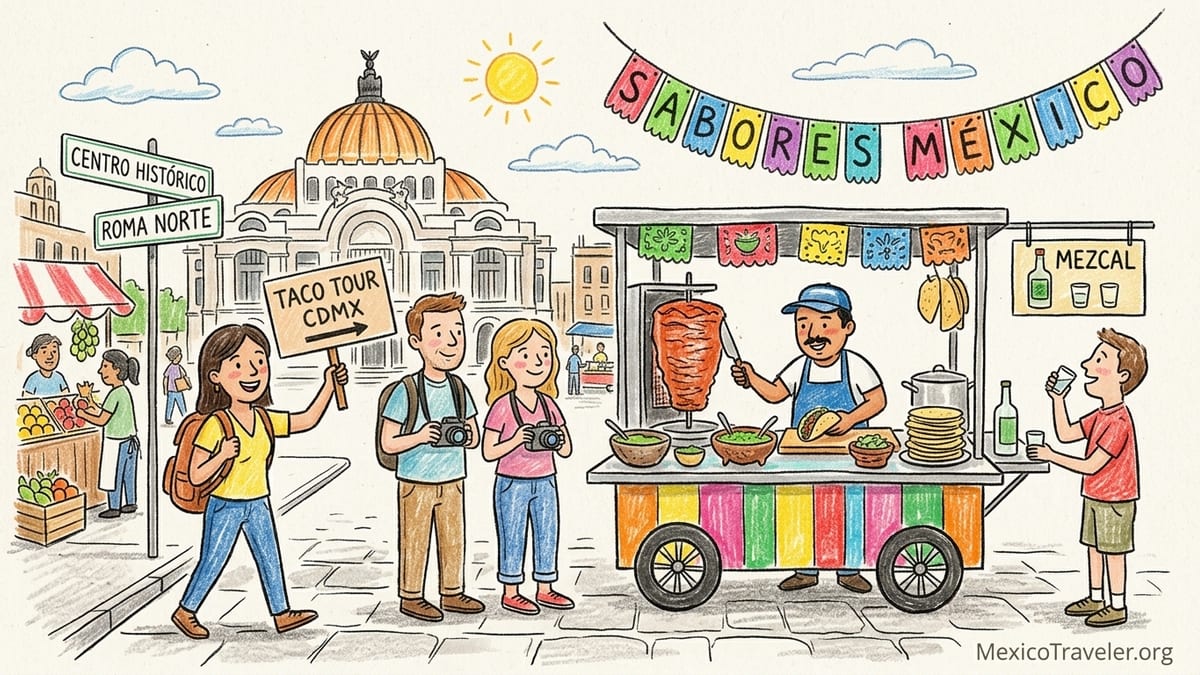
How I judge a Mexico City food tour (and how you should, too)
Mexico City food tours work best when they do two things at once: feed you well and make you better at eating around the city afterward. The real value is not just the tacos you inhale on the walk. It’s learning what to order, how to spot a good stand, how to navigate markets, and how to understand what you’re tasting beyond “this is delicious.”
I prioritize formats that match how people actually eat in CDMX: street-taco walks with multiple micro-stops, market tours that mix raw-ingredient culture with cooked food, and food-plus-mezcal experiences that finish seated so you can slow down and ask questions. I also look for practical details that separate a serious operator from a vague one: clear start time, realistic duration, whether water is included, whether you’ll be standing or seated most of the time, and whether the company can accommodate common dietary needs without derailing the group.
Finally, I use a simple test: would I come back to at least one stop on my own without the guide? Great tours don’t just show you food. They hand you a short list of places you’ll actually return to, plus the confidence to order like you belong there.
Centro Histórico street-food tours: where the city’s greatest hits make sense
If you want the “Mexico City in one afternoon” version of a food tour, Centro is the strongest base. The density is the point: within a tight radius you can move from classic tacos to seafood tostadas to market fruit, and the city itself becomes part of the tasting.
One of the most established, Centro-forward options right now is Sabores México’s Historic Center Food Tour, listed from about USD $115 with vegetarian/vegan and other special dietary needs noted as available, and free cancellation up to 24 hours before the tour. It’s positioned as a story-driven tour with multiple tastings and includes a bottle of water. A detail I like here is the explicit mention of Mercado de San Juan as part of the experience, which matters because San Juan is one of the easiest markets for first-timers to understand quickly while still feeling distinctly local.
For travelers who want Centro with a strong market backbone, Eat Mexico’s San Juan Market and Street Food Tour is currently described as visiting Mercado de San Juan and the Arcos de Belém market and pairing market time with classic street foods like steak tacos, seafood tostadas, mole, and quesadillas. Eat Mexico also advertises flexible cancellation: cancel up to 48 hours before the tour begins for a full refund, and notes that tours include the food you can eat, water, and usually one or two other beverages such as coffee, juice, or an agua fresca.
If you’re exploring Centro independently, build your own “tastings” around a market anchor and a few nearby street-food stops so you don’t crisscross the neighborhood. Mercado de San Juan (often called San Juan Pugibet) is the market most travelers can navigate without feeling overwhelmed, and it’s known for gourmet and exotic ingredients that attract chefs and serious home cooks.
Roma Norte food tours: the best format for first-timers who want variety
Roma is where Mexico City’s modern dining energy and everyday snacks overlap. You can sample traditional street flavors and still get that “cool neighborhood walk” feeling between stops, which makes it a natural place for a mid-length afternoon tour.
A currently bookable option with clear pricing is Sabores México’s Roma Norte tour, listed at about MXN $2,200, with a stated meeting point at Av. Yucatán 99 in Roma Norte. In the Roma format, what matters most is pacing: you want enough stops that you can compare styles, but not so many that you stop tasting and start merely consuming.
Roma is also ideal for travelers who want to keep the rest of the day flexible. A good Roma tour should leave you with a list of places you can return to for a quick solo lunch, a coffee break, or a late-night taco run. This is where the “value beyond the bites” shows up: a guide can give you situational awareness about what’s worth lining up for, what’s a hype trap, and what’s quietly great on a random Tuesday.
Independent Roma strategy: don’t try to do “every famous place” in one day. Pick a lane. Either do a taco-forward crawl (two or three taquerías, one dessert, one drink) or do a market-hall style sampling (like an upscale market stop) and save the street tacos for late night. Roma rewards repeat visits, not one marathon.
Food plus mezcal: the formats that feel like a night out, not an assignment
When people say they want a “mezcal tour,” what they usually mean is: I want a fun evening, I want to understand what I’m drinking, and I don’t want to accidentally end up on a sloppy bar-hop. The best operators treat mezcal as culture and craft, not as a punchline.
Eat Like A Local currently lists a “Tacos, Snacks & Mezcales” style slot at USD $115 (17:00 to 19:30), and also describes a mezcal tasting and pulque journey as a relaxed wander that eats tacos and snacks and finishes at a sidewalk restaurant learning about production, terroir, and different agaves, with an option to switch the tasting for two cocktails. That “finish seated” detail matters: it’s where questions happen and where you actually retain what the guide is explaining.
Sabores México offers a higher-intensity tacos-and-mezcal format with transport built in. Their “Taco Beats and Mezcal Sips” is listed from about USD $135, with a 3.5-hour duration, a 6:30 p.m. start, a group size listed as 10 people, and a meeting point at Serapio Rendón 27 in San Rafael. It’s described as 5 taco spots plus 1 mezcal bar, with 15+ tastings, all tacos and drinks, and private transport during the tour. Dietary notes here are more restrictive: it’s not recommended for vegetarians and vegans, though options are noted for allergies and special dietary needs.
Independent mezcal strategy: if you’re new to mezcal, look for a place that will pour small tastes and explain the basics clearly (agave type, production method, region, and why “smoky” is not the only flavor). If you’re doing mezcal on your own, eat first or pair it with tacos or a sit-down plate. Mezcal with no food is where many travelers misjudge their tolerance.
Multi-market experiences (San Juan and La Ciudadela): what they’re actually good for
Multi-market tours are trending for a reason: they combine edible culture with a sense of place. In Centro, pairing Mercado de San Juan with La Ciudadela makes practical sense because you get two different “souvenirs” from Mexico City in one outing: ingredients and snacks you can eat, plus crafts you can pack.
San Juan is your edible museum, especially for travelers who want to see specialty produce, meats, cheeses, and pantry items that show up in restaurants. La Ciudadela, meanwhile, is primarily a crafts market known for Mexican handcrafts and folk art. A combined experience can be a smart use of time if you want to shop and snack without planning logistics.
What I like about a San Juan-based tour is that it can teach you how to buy gifts that aren’t generic. Think: a small bag of high-quality chiles, a specialty chocolate, or ingredients you can actually use back home. What I like about a Ciudadela stop is that it’s a built-in decompression after a busy market. You’re still “doing something,” but the pace slows.
Independent multi-market strategy: go to San Juan first, eat something small, then shop. After that, walk or take a short ride to La Ciudadela when you have energy for browsing. If you do it in the opposite order, you’ll arrive at San Juan distracted and less willing to try unfamiliar bites.
What you should know before you book: prices, cancellation, group size, and dietary reality
Mexico City tour prices have settled into clear tiers. Roma and Centro walking tours from established operators commonly sit around the USD $100 to $120 range, with premium tacos-plus-mezcal formats climbing higher when transport and alcohol are heavily included. For example, Sabores México lists its Historic Center tour from about USD $115 and its taco-and-mezcal tour from about USD $135. Eat Like A Local lists tours like “Tacos, Snacks & Mezcales” at about USD $115 and other specialty formats around USD $120. These numbers are not “cheap,” but the better tours are designed as full tastings rather than token bites.
Cancellation policy is where operators differ sharply. Eat Mexico advertises flexible cancellation, offering a full refund if you cancel up to 48 hours before your tour begins. Sabores México notes free cancellation up to 24 hours before a tour. Club Tengo Hambre’s terms state that bookings are final and non-refundable, which is a major consideration if your plans in CDMX might shift due to weather, flights, or altitude fatigue.
Dietary options are also not universal. Some operators explicitly say they can’t accommodate severe food allergies or strict dietary accommodations for certain street-food formats, and some taco-heavy, nightlife-leaning itineraries are not recommended for vegetarians or vegans. If dietary flexibility is a priority, look for tours that explicitly say vegetarian/vegan options are available and confirm what “available” means before you pay: is it a true alternate tasting at each stop, or a lighter “snack and sip” substitution?
Finally, be honest about your appetite and your schedule. Many of these tours can replace a meal if you arrive hungry and don’t eat a full lunch beforehand. The mistake I see most often is booking a 12:00 tour and also reserving a big 2:30 lunch. Choose one main meal window and let the tour be it.
The Takeaway
The best Mexico City food tours aren’t just a string of bites, they’re a confidence boost. Centro tours shine when they anchor you in the city’s markets and classic street-food rhythm. Roma tours are ideal for first-timers who want variety and a neighborhood walk that feels easy. Food-plus-mezcal experiences work best when they finish seated, with enough structure to teach you what you’re drinking. And multi-market itineraries that pair Mercado de San Juan with craft-heavy La Ciudadela can be a smart, time-saving way to eat and shop without overplanning.
If you’re choosing between operators, prioritize clarity: clear meeting points, a realistic duration, stated group size, and a cancellation policy you can live with. Then decide what you want to learn. “How to eat street food confidently” points you toward Centro and market-forward formats. “How to drink mezcal with context” points you toward structured tastings. “How to sample widely in a trendy neighborhood” points you toward Roma.
And if you do only one thing: let the tour teach you what to do the next day on your own. The real ROI is returning to places you now understand, ordering faster, and eating better with every stop.
FAQ
Q1. Do Mexico City food tours replace a full meal?
Often, yes, especially taco crawls and market tours with multiple tastings. Plan on skipping a big meal before the tour unless the operator says portions are light.
Q2. What’s the best neighborhood for a first food tour in CDMX?
Centro Histórico is the most efficient introduction because it concentrates markets, classic street foods, and cultural context within a walkable area.
Q3. Are Roma Norte food tours worth it if I can just eat on my own?
They’re worth it when the guide improves your “CDMX food instincts,” such as what to order, how to navigate, and which places are truly repeat-worthy.
Q4. Which tours have the most flexible cancellation policies right now?
Policies vary by operator. Some advertise full refunds up to 48 hours before start time, while others offer free cancellation up to 24 hours, and some are non-refundable.
Q5. Can vegetarians or vegans do Mexico City food tours?
Many operators offer vegetarian or vegan options on some routes, but taco-and-mezcal formats can be more limited. Confirm in writing before booking.
Q6. Are food-plus-mezcal experiences just bar crawls?
The best ones are not. Look for tours that emphasize food first and finish with a structured mezcal tasting where you learn about production and agave.
Q7. What is Mercado de San Juan best for on a tour?
It’s excellent for understanding ingredients, specialty products, and the “chef supply” side of Mexico City eating, plus tasting select bites in a focused way.
Q8. Why do some tours include La Ciudadela along with food markets?
La Ciudadela is a major crafts market, so pairing it with a food market creates a combined eat-and-shop experience without extra logistics.
Q9. How much walking should I expect on a CDMX food tour?
Most Roma and Centro tastings are walking-based and feel like a neighborhood stroll between stops. Wear comfortable shoes and expect standing at some stalls.
Q10. What should I do the day after a food tour to get the most value?
Return independently to one or two standout stops your guide recommended, order confidently, and use what you learned to explore a different market or taquería solo.