


Palenque is one of Mexico’s great archaeological stops, but it is also a surprisingly spread-out destination. The ruins sit in the forest, the bus stations and everyday life are in town, and a string of hotels fills in the space between. Choosing where to sleep is less about star ratings and more about whether you want to walk to dinner, fall asleep to howler monkeys, or roll straight off an ADO or Tren Maya service into a poolside room. This guide focuses on that location decision first, then highlights specific hotels and cabins that are currently open and well reviewed in each area.
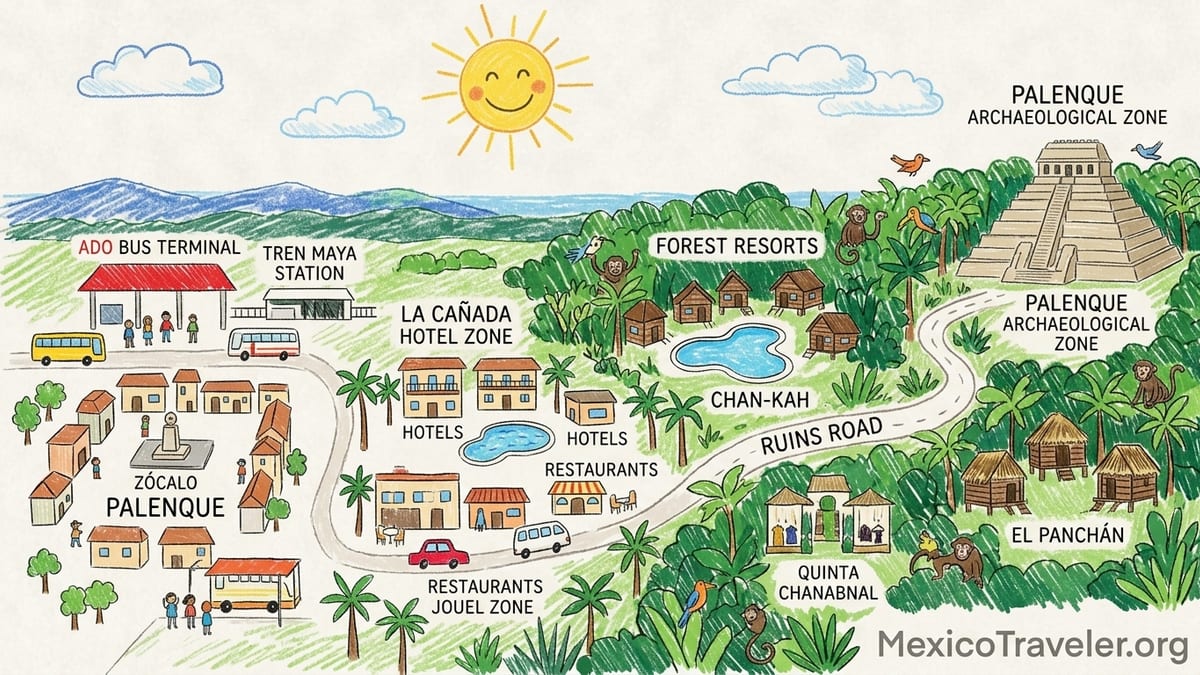
How Palenque Is Laid Out and Why Location Matters
The modern town of Palenque sits a good 7 to 8 kilometers inland from the archaeological zone along a winding forest road. Most hotels aimed at visitors are not next to the main square but in districts strung along this road toward the ruins. This layout means that two properties with similar prices and amenities can offer very different experiences and transport costs, depending on whether they are in central Palenque, the La Cañada hotel zone, halfway to the ruins, or in the jungle cluster of El Panchán near the park entrance.
Three types of travelers feel this layout most acutely. The first are visitors relying on ADO buses or the new Tren Maya services, who may prefer to stay close to stations and restaurants and use taxis or colectivos for the ruins. The second are archaeology enthusiasts planning dawn starts at the site, who value quiet nights, early breakfast and quick access to the entrance. The third are waterfall chasers heading to Misol-Ha or Agua Azul and then onward to San Cristóbal de las Casas or Campeche, for whom being too deep in the jungle can complicate departures.
Across Palenque, midrange hotel rates in 2026 often hover around 1,000 to 1,800 Mexican pesos per night for a double room, depending on season, while higher-end jungle boutiques such as Quinta Chanabnal can climb to several thousand pesos for suites, especially in holiday periods. Budget guesthouses and simple cabañas still exist under 900 pesos if you are willing to trade polished finishes for simpler rooms and some mosquito exposure. Almost all established hotels now have air conditioning, but not all offer equally strong Wi-Fi or early breakfast sittings, which matters on days when you want to be at the ticket booth as gates open.
Staying in Central Palenque: Practical for Buses and Budgets
Central Palenque, around the zócalo and main commercial streets, is the most functional place to sleep rather than the most atmospheric. The advantages are clear if you are arriving late or moving on early. The ADO bus terminal sits close to the center, and Tren Maya services use stations connected by taxi within a short ride. Budget hotels, small inns and rooms above shops dominate this zone, with simple fan or air-conditioned rooms, tiled floors and minimal on-site facilities. Nightly rates can fall in the 600 to 1,200 pesos range for a basic double room, which appeals to backpackers and longer-term travelers watching every peso.
Eating and errands are easy from central Palenque. Taco stands, loncherías and bakeries open early and close late, which solves the early-breakfast issue for ruins visits if your hotel does not serve food before 7:00. You can grab coffee and a pastry at a panadería by 6:30, walk to the shared colectivos on the main road, and be among the first at the archaeological site without needing your own car. Pharmacies, ATMs and small supermarkets are all clustered here, so picking up insect repellent or snacks for a long day out is straightforward. Noise, however, can be a downside, with traffic, music and dogs audible late into the evening.
The main trade-off for staying in the very center is the lack of green space and pools. Most central budget properties do not have swimming pools, and those that do often have small courtyards rather than sprawling gardens. Parking may be street-side or in tight courtyards, which can feel cramped for those driving rental cars. Wi-Fi coverage is generally acceptable but may be weaker in older concrete buildings. For solo travelers and very budget-conscious visitors arriving by ADO or Tren Maya and leaving the next day, the combination of low rates, walkable dining and easy access to colectivos can still make central Palenque the most sensible choice.
La Cañada: The Convenient Hotel and Dining Cluster
Just uphill from the bus station, La Cañada is Palenque’s primary tourist hotel zone and often the best compromise between comfort and convenience. Streets are greener, traffic is calmer than in the center, and midrange hotels with pools cluster together with restaurants that cater to visitors. La Cañada is still firmly “in town,” which means you can walk from Hotel Maya Tulipanes or Hotel Chablis Palenque to the ADO terminal in roughly five to ten minutes and find dinner options within a short stroll.
Hotel Maya Tulipanes, trading under the Maya Tulipanes Express name in some listings, is a long-established property in La Cañada. Current descriptions note its location only a few steps from the ADO station and around ten minutes on foot from the main square, with a pool, on-site restaurant and air-conditioned rooms. Taxi rides from here to the archaeological zone generally cost in the region of 80 to 120 pesos one way, and shared colectivos can be flagged on the main road for a lower per-person fare. For families, the ability to cool off in the pool after a hot ruins visit, then walk to pizza or grilled meat nearby, makes Maya Tulipanes an attractive midrange pick.
Hotel Chablis Palenque is another strong La Cañada option, frequently recommended by recent travelers for offering good value and a quiet atmosphere just off the main street. Rooms are air conditioned, Wi-Fi is included, and there is an on-site pool and parking. Several recent visitors arriving by bus have highlighted how practical it felt to check into Chablis, drop bags, and still walk out for dinner without needing a taxi after a long travel day. With nightly rates often around 1,000 to 1,600 pesos for a double depending on season, these properties deliver hotel-level comfort at prices competitive with more rustic cabañas further up the road.
The La Cañada zone suits several traveler profiles very well. Couples who want a comfortable base with dining choices can stay here and use taxis to reach the ruins in 15 to 20 minutes. Solo travelers appreciate being able to walk back from restaurants after dark. Archaeology enthusiasts can still make early starts, as many La Cañada hotels begin breakfast from roughly 7:00; those with 8:00 sittings can be bypassed by grabbing fruit or pastries from nearby cafes before heading out. Visitors planning onward bus or Tren Maya connections avoid long pre-dawn taxi rides back from the jungle and can travel light, knowing they can return to their room between excursions and evening departures.
The Road to the Ruins: Forest Resorts Between Town and Site
Between La Cañada and the national park entrance, the road climbs gently into thicker forest, and hotels become more spread out. Properties here market themselves on their greenery and sense of retreat while remaining a short drive from both town and ruins. Chan-Kah Resort Village and Hotel La Aldea del Halach Huinic are two of the best-known names in this corridor, along with boutique Hotel Quinta Chanabnal, which offers a more intimate, upscale experience in gardens that feel close to the jungle.
Chan-Kah Resort Village sits off the main road in extensive grounds with mature trees and large free-form pools. Cabaña-style rooms offer air conditioning, private bathrooms and terraces. On-site you will find a full-service restaurant, bar, and pool snack menu, with recent poolside menus listing cocktails such as mojitos around the mid-100 pesos range. The resort includes parking and 24-hour reception, which helps late arrivals. About ten to fifteen minutes by car from the ruins and a similar time to town, Chan-Kah works best for those with rental cars or who are comfortable relying on taxis for every outing.
Hotel La Aldea del Halach Huinic is another forested complex of cabins near the national park’s edge. Recent booking information places it roughly 2 kilometers from Palenque town and around 4 to 5 kilometers from the ruins, offering an in-between location among tropical gardens. Rooms are in thatched-roof buildings with terraces, air conditioning and private bathrooms. Guests highlight the relaxed pool area and easy taxi ride from the ADO terminal at approximately 80 pesos, as of late 2025 and early 2026, for a one-way trip. The hotel has a restaurant, private parking and Wi-Fi in common areas, which supports travelers who want a nature setting without giving up basic services.
Quinta Chanabnal stands out at the higher end, with just a handful of suites in grounds that evoke Maya-style architecture among dense gardens. Current hotel information and reviews describe two outdoor pools designed to echo waterfalls, a small lake, and frequent wildlife like monkeys and birds. Breakfast is typically included in rates and served as a substantial continental spread with fresh fruit, granola, bread and hot drinks, starting early enough for guests to reach the site soon after opening. With only around eight suites, service is attentive and the on-site restaurant handles all meals, which matters given the lack of neighboring eateries. Nightly rates are significantly higher than midrange options in town, but the combination of comfort, quiet and design appeals to couples and archaeology fans seeking a memorable base.
El Panchán and Rustic Jungle Stays Near the Park Entrance
The final cluster of accommodation sits close to the archaeological park entrance in an area known as El Panchán. Here, cabañas and small guesthouses are tucked among the trees, sometimes reached by dirt paths from the main road. The appeal is obvious to nature lovers. You are much more likely to hear howler monkeys at dawn, the night sky is darker, and the air feels cooler among the trees than in town. Rooms, however, tend to be simpler: screened windows, ceiling fans or basic air conditioning, concrete floors and limited storage. Some places offer shared bathrooms and cold-water showers to keep rates in the budget bracket.
El Panchán has long attracted backpackers and budget couples who prioritize setting over frills. Nightly prices for basic cabins can start under 800 pesos for two people, and simple breakfast plates and dinners are available in on-site restaurants or communal palapas. Because properties change names or management relatively often, it is wise to verify current operating status and recent reviews before committing, especially if you need strong Wi-Fi for remote work or are sensitive to noise from communal hangout spaces.
From El Panchán, the ruins are a short taxi or colectivo ride, or even walkable for energetic visitors willing to brave humidity and hills. Colectivos pass regularly on the main road during daylight hours at low per-person fares, making this area convenient for ruins-focused days. The trade-off appears when you want to visit sites further afield such as Misol-Ha or Agua Azul. Without your own car, you depend on tour pickups that may need to detour to your jungle lodging or require you to meet at a point back in town. After dark, taxi availability can thin out, and drivers may charge more to travel the less-lit road, so late dinners in town can become logistically awkward.
For solo travelers, especially women, a remote cabin reached via unlit paths may feel isolating after nightfall. Couples who enjoy lively communal spaces and are comfortable with rustic conditions can enjoy the convivial atmosphere and forest immersion. Families with younger children often find that easier access to pharmacies, snacks and medical care in town outweighs the romantic idea of sleeping in the canopy. Electricity interruptions and patchy Wi-Fi are more common here than in La Cañada, which can be part of the charm or a genuine inconvenience, depending on your needs.
Costs, Comfort and Convenience: What Really Changes by Area
The biggest financial difference between staying in town and in the jungle is not the room rate itself but what you spend every day on transport and food. A midrange double room in La Cañada might cost 1,300 pesos per night with simple breakfast included or available on site. A comparable or slightly more expensive cabin on the road to the ruins might list at 1,600 pesos per night. On paper the difference looks modest. In practice, if you stay in town you can walk to a range of restaurants at different price points and pay a shared colectivo fare of a few dozen pesos each way to the ruins. In a more isolated jungle hotel, you may rely on a single on-site restaurant for almost every meal and need a taxi at roughly 80 to 150 pesos each way every time you want to go into town.
For a couple without a rental car, those taxi rides add up. Two round trips per day between a jungle hotel and town or the ruins can easily cost several hundred pesos. Over a three-night stay, that can erase any nightly savings you might have gained by choosing a slightly cheaper cabin. Food costs can be higher as well if you are effectively captive to one menu for dinner, without the option to wander between budget taco stands and midrange sit-down spots. On the other hand, if you already plan to eat most dinners at your hotel and spend full days out on guided excursions that collect you at reception, the transport premiums may be less significant.
Comfort factors also vary by micro-location. Hotels in La Cañada and along the road to the ruins are more likely to have substantial swimming pools, landscaped grounds and proper sound insulation between rooms. Central town guesthouses may have older air conditioning units and thinner walls but benefit from stronger mobile data coverage. El Panchán cabins can feel immediately cooler and more breathable due to the vegetation and elevation, but mosquito pressure is usually higher in dense foliage, especially near streams. Most established jungle resorts use a mix of screens, fans, regular fumigation and bed nets, yet travelers who are sweet to mosquitoes may want to pay extra attention to repellent and clothing choices.
Wi-Fi has improved markedly in Palenque but remains uneven. Reviews from early 2026 indicate that hotels like Quinta Chanabnal and Maya Tulipanes provide stable connections sufficient for streaming and light work, while smaller cabins in El Panchán sometimes still report weak or lobby-only signals. If reliable connectivity is essential, this may push you toward La Cañada or larger forest resorts rather than the most rustic jungle option. Accessibility is another point: resorts and midrange town hotels are more likely to offer ground-floor rooms near reception and restaurant areas, while budget central hotels and hillside jungle cabins can involve flights of stairs and uneven paths.
Matching Hotels and Areas to Different Types of Travelers
Couples looking for a romantic setting and time at the ruins often gravitate toward Quinta Chanabnal or Chan-Kah Resort Village. Quinta Chanabnal offers jungle-style intimacy and a sense of seclusion without being too far from either town or the site, making it ideal for two- or three-night archaeology-focused stays where you want early breakfasts, quiet nights and attentive service. Chan-Kah, with its larger pools and more expansive grounds, strikes a balance for couples who want resort-style downtime mixed with day trips to the ruins and waterfalls. Both options work best if you are comfortable relying on in-house dining for some evenings or have a rental car.
Families with children tend to value easy pool access, on-site restaurants with familiar dishes and straightforward logistics. La Aldea del Halach Huinic, with its gardens and pool area, can be a good fit, especially when combined with taxi or tour transport arranged through reception. In town, hotels like Maya Tulipanes and Chablis offer pools and restaurant service within a compact footprint and walking access to La Cañada eateries. For families arriving by ADO or Tren Maya, checking into Maya Tulipanes and walking over from the bus station keeps arrival stress low, and using morning taxis or colectivos to the ruins avoids the complexities of driving.
Solo travelers, particularly those on a budget, often do best in La Cañada or central Palenque. Being able to walk to restaurants and shared transport stops creates natural chances to meet others and reduces dependence on private taxis at night. El Panchán can be enjoyable for social backpackers comfortable sharing communal spaces, but isolated cabins far from public areas can feel too quiet after dark. For archaeology enthusiasts who will spend long hours at the ruins and possibly join excursions to nearby sites like Bonampak and Yaxchilán, splitting time can work well: spend an initial night or two in La Cañada for logistics, then move to a more immersive jungle hotel like Quinta Chanabnal once you have oriented yourself.
Visitors planning onward travel to San Cristóbal de las Casas, Villahermosa or Campeche need to think about where they want to wake up on departure day. A hotel physically close to the ruins might seem ideal during planning, but it can be less convenient if your bus leaves from town at 7:00 in the morning. In that case, either arrange an early taxi pickup from your jungle hotel or plan to move back into La Cañada or central Palenque for the last night. For those arriving by Tren Maya and staying only one night in transit, a La Cañada hotel with 24-hour reception or flexible check-in times is usually more practical than a remote cabaña, simply because late-night taxis further up the road are less predictable.
Early Starts, Packed Breakfasts and Touring Beyond the Ruins
Many travelers want to reach Palenque’s archaeological zone right at or soon after opening time to enjoy cooler temperatures and thinner crowds. In recent years, several midrange and upscale hotels have adapted by offering early breakfast or packed-meal options. At Quinta Chanabnal, for example, guests report that the included continental breakfast is served early enough to allow departures to the site in the morning, and staff can help organize guided tours that start promptly. In town hotels like Maya Tulipanes, breakfast from around 7:00 is common, which means you may arrive at the ruins a bit later but still in the cooler part of the day. When making reservations, it is worth asking reception directly whether early breakfast or packed lunches are available for days when you have prebooked tours.
Cabins and budget stays in El Panchán may not offer very early breakfasts in low season, especially if they run small kitchens. In those cases, stocking up on fruit, bread, or packaged snacks in town the previous day is wise. Central bakeries in Palenque often open their doors by early morning, so travelers staying in La Cañada can pick up provisions on the walk back to their hotel. For guests with tight schedules, such as same-day visits to Misol-Ha before an evening bus, choosing a hotel that can reliably serve breakfast at a set hour matters more than whether the property is a kilometer closer to the ruins.
It might seem that a hotel near the park entrance is automatically the best base for excursions to the region’s famous waterfalls and jungle sites, but that is not always the case. Tours to Misol-Ha and Agua Azul frequently originate in town or the La Cañada area, and operators sometimes prefer to pick up groups from a few central hotels rather than detouring deep into the jungle. If you are staying at a more remote property, you may be asked to meet your tour in town or pay a surcharge for pickups further along the road. Travel to onward destinations like San Cristóbal de las Casas also always begins in town, so any savings in driving time to the ruins are offset by having to travel back to bus terminals first.
For independent travelers with rental cars, these issues soften but do not disappear. Parking at most midrange hotels and resorts is free and relatively secure, while central budget guesthouses may offer only street parking. Road conditions between town, the ruins and major waterfalls are generally good, but driving after dark in heavy rain can still be challenging. Staying slightly closer to town or in La Cañada provides quicker access to fuel, mechanics and roadside services if something goes wrong. For visitors without vehicles, factoring the cost and availability of taxis and colectivos into the overall trip budget is essential when comparing town and jungle options.
The Takeaway
Choosing the best hotel in Palenque is really about choosing the area that matches how you will move around, what you want to do in the evenings, and how important jungle immersion is to you. Central Palenque is the most practical for very tight budgets and quick bus connections, but it lacks greenery and pools. La Cañada offers the most balanced experience, with comfortable midrange properties like Hotel Maya Tulipanes and Hotel Chablis Palenque, walkable restaurants, and easy access to both ADO and Tren Maya services. The road to the ruins hosts some of the region’s standout resorts and boutiques, including Chan-Kah Resort Village, La Aldea del Halach Huinic and Quinta Chanabnal, which suit couples, families and archaeology enthusiasts willing to rely on taxis or rental cars. El Panchán and similar jungle clusters appeal to those who prioritize atmosphere and cost over polished amenities.
For a single-night transit stay, especially if you are arriving late or leaving early by bus or train, La Cañada or central Palenque is usually the smartest base. You keep transfers short, have multiple dinner options on foot, and can easily arrange early taxis or walk to your departure point. For a two- or three-night archaeological holiday that combines long hours at the ruins with slow afternoons in a pool or hammock, staying in a forest property along the road to the site can deepen the experience, particularly at places like Quinta Chanabnal or Chan-Kah. Travelers who want to chase waterfalls, explore more of Chiapas or continue toward the Lacandon Jungle may find that a split stay works best: start or finish in La Cañada for effortless logistics, then spend the heart of the trip among the trees, where the calls of howler monkeys and the dense green canopy make it clear you are on the edge of one of Mesoamerica’s great ancient cities.
FAQ
Q1. What is the most convenient area to stay in Palenque without a car?
La Cañada is generally the most convenient area without a car, as it is close to the ADO bus station, has many restaurants within walking distance, and offers easy access to taxis and colectivos for the ruins and waterfalls.
Q2. Are jungle hotels like Chan-Kah or Quinta Chanabnal practical if I arrive by ADO or Tren Maya?
They can be practical for stays of two nights or more, but you should budget for taxi rides for almost every outing and plan to eat many meals on site, since walking to town for dinner is not realistic after dark.
Q3. How much should I expect to pay for a midrange hotel in La Cañada?
As of 2026, many midrange hotels in La Cañada, such as Maya Tulipanes or Chablis, often list double rooms in the range of about 1,000 to 1,800 pesos per night, depending on season and demand.
Q4. Do Palenque hotels offer early breakfast or packed meals for visiting the ruins?
Several midrange and upscale hotels, including some along the road to the ruins, can serve early continental breakfasts or provide packed meals on request, but policies vary, so it is important to confirm this with your chosen property before arrival.
Q5. Is it worth staying closer to the ruins to visit Misol-Ha and Agua Azul?
Not necessarily, because tours to Misol-Ha and Agua Azul usually depart from town or La Cañada, so you may end up traveling back toward the center anyway, which can offset the time saved by being nearer to the archaeological site itself.
Q6. Which areas are best for families with children?
Families often do well in La Cañada or in forest resorts on the road to the ruins, where there are pools, on-site restaurants and easy taxi access, while more rustic jungle cabins in El Panchán can feel isolated or less predictable with younger kids.
Q7. Are there truly low-budget options near the jungle?
Yes, simple cabañas in areas like El Panchán and some older guesthouses offer basic rooms under about 900 pesos per night, but these often involve simpler amenities, more mosquito exposure and less reliable Wi-Fi than midrange hotels in town.
Q8. How noisy is central Palenque compared with La Cañada or the jungle?
Central Palenque can be noisier due to traffic, music and late-opening businesses, while La Cañada is typically quieter and more residential; jungle areas replace city noise with sounds of wildlife, which some guests find soothing and others disruptive at night.
Q9. Is Wi-Fi reliable in Palenque hotels?
Wi-Fi is generally reliable in established midrange and upscale hotels in La Cañada and along the road to the ruins, while more rustic cabins in El Panchán may have weaker or lobby-only signals, so anyone working remotely should verify connectivity before booking.
Q10. For a three-night stay focused on archaeology, where should I book?
For three nights focused on the ruins, many travelers choose a comfortable jungle or forest hotel along the road to the site, such as Quinta Chanabnal or Chan-Kah, sometimes pairing this with a final night in La Cañada to simplify early-morning departures by bus or train.