


I learned the hard way that “Colonial Mexico” is not one forecast. On one trip, I went from sunbaked afternoons in the Bajío to a genuinely chilly evening in Zacatecas where my hands felt stiff around a café mug, then down to Puebla where the air felt thinner and brighter under a fierce midday sun. I’ve walked Guanajuato’s alleyways in dry-season dust that clung to my shoes, and I’ve tiptoed across rain-polished stone in Morelia as umbrellas collided in a crowd headed to the evening’s events. If I were planning my next loop through the Bajío, Puebla, Morelia, and Zacatecas, I’d pick dates with one eye on the sky and the other on the cultural calendar, because weather, prices, and crowds tug in different directions depending on the month and the city.
What “Colonial Mexico” Felt Like To Me, City By City
The first surprise for me was the rhythm of highland days and nights. In places like Guanajuato, Zacatecas, Puebla, and Morelia, the midday sun can feel blunt and direct, even when the air temperature isn’t extreme. I remember stepping out of a museum into a plaza that looked calm and pastel, then squinting so hard I had to stop and dig out sunglasses I thought I wouldn’t need. By evening, that same plaza could feel cool enough that my lightweight travel shirt suddenly seemed like a mistake.
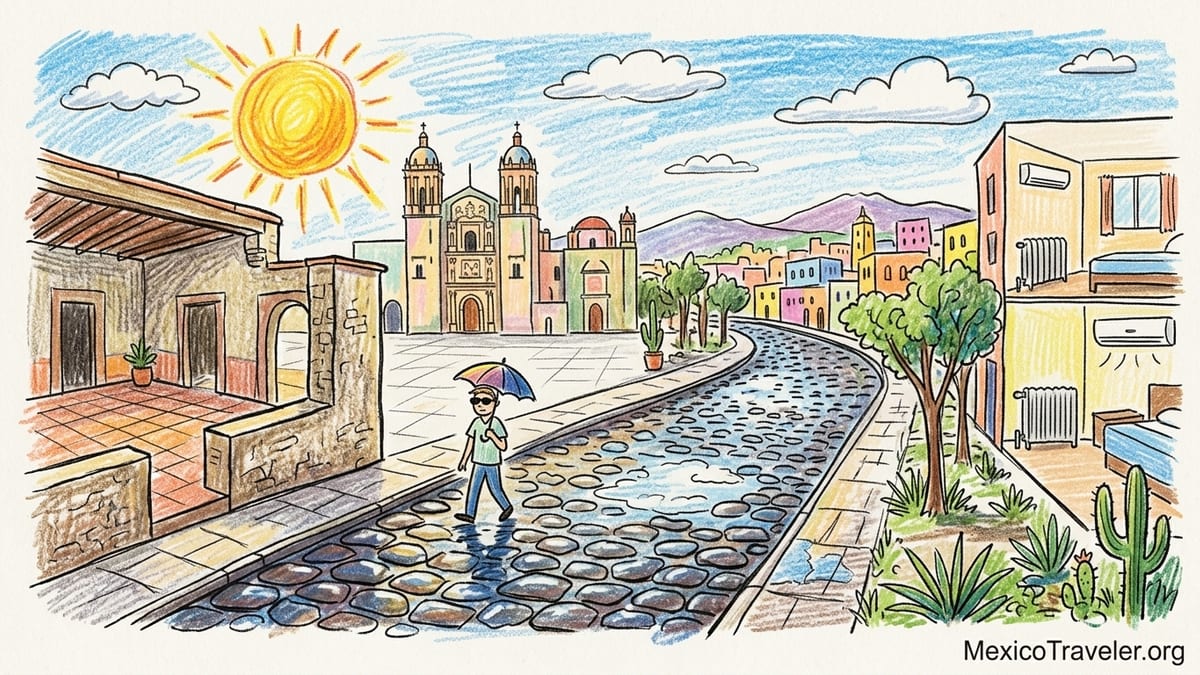
The second surprise was how different “rain season” feels on foot in colonial centers. When the first downpours hit, the stone streets don’t just get wet, they get glossy. In narrow lanes and on sloped callejones, my walking pace slowed to a careful shuffle. The combination of slick cobblestones, narrow sidewalks, and cars squeezing through historic cores changed my days from “wander until dinner” to “duck inside, wait it out, then continue.”
The third surprise was hotels. In much of this route, the question is less “Do I need air conditioning?” and more “Will my room feel cold at night?” In older colonial buildings with thick walls and tiled floors, my room sometimes stayed cooler than I expected. I’ve had evenings where I wished I’d chosen a place with reliable heating, or at least brought warmer sleepwear. Meanwhile, in warmer shoulder-season afternoons, air conditioning can still matter in some modern hotels, especially if your room faces sun for hours.
Monthly Weather Patterns: The Route Isn’t One Climate
Planning gets easier once you accept that these four areas do not share one uniform pattern. Morelia’s climate normals show warm-to-hot afternoons most of the year with a pronounced wet season, and the rainfall spike is not subtle: summer months can bring frequent, heavy precipitation compared with the dry winter. The same pattern echoes across much of central Mexico, but the intensity and nighttime chill vary by elevation and local geography.
Morelia, for example, typically runs with comfortable winter days and chilly nights, then hotter spring afternoons before rains build. In the rainy season, cloud cover and humidity rise along with the downpours, and the city feels softer and greener, but also slower to navigate on foot. I remember planning long walking loops and then trimming them down once I realized how often I was stepping into doorways to let a storm pass.
Zacatecas is where I most felt altitude bite at night. The city sits high enough that evenings can cool quickly, and that changes what “comfortable” means even in months that look mild on paper. This is the spot on the route where I’d treat a warm layer as non-negotiable for much of the year, especially if you plan sunset viewpoints or nighttime walks around the historic center.
Puebla’s highland setting gives it a bright, crisp feel that can fool you into underpacking sun protection. Even when afternoons don’t feel scorching, the sun can feel strong and reflective against pale stone and cathedral facades. I’d plan Puebla days with shade breaks, especially if you’re doing long walks between the Historic Centre, artist neighborhoods, and market stops.
Dry Season (Roughly November To April): The Walking-Heavy Sweet Spot With A Cold-Night Catch
If my goal is to walk all day, take photos, and keep plans flexible, I keep coming back to dry season. In Guanajuato and the wider Bajío, dry months often mean clearer skies and low rainfall, which is exactly what you want when your itinerary is basically “follow the alleys until something beautiful appears.” In this season, I’ve been able to stack a morning museum, a long lunch, and an evening performance without re-planning around storms.
The catch is temperature swing. In the highlands, the shift from sunny afternoon to cool evening can feel dramatic, especially in stone-heavy historic centers where shade settles early. The mistake I made once was packing like it was a beach destination: plenty of light tops, not enough warmth. I had to buy an extra layer in-town and I still remember feeling slightly ridiculous wearing it at noon and grateful for it at 8 p.m.
Hotel heating matters more than travelers expect. In some colonial-style hotels and renovated historic buildings, the vibe is romantic but the rooms can feel cool at night. I now check room details carefully and, when I’m choosing between two similar options, I’ll pay more for a place that clearly mentions heating, good insulation, or modern climate control. In dry season, I’d rather sleep well than save a small amount per night.
Heat, Strong Sun, And The Pre-Rain Months (March To May): When I’d Pack Differently
Spring can be the moment when the sun feels most intense, especially from late morning to midafternoon. Even if the thermometer doesn’t scream “heat wave,” the direct sun can feel relentless on open plazas and long, reflective streets. This is when I’m happiest with a brimmed hat I actually like wearing, not the flimsy emergency cap I once shoved into a bag and never used because it looked awkward.
This is also the time I’ve seen travelers underestimate hydration. In places like Guanajuato and Zacatecas, where you climb stairs and slopes without realizing how much you’re working, it’s easy to get lightheaded if you’re only sipping occasionally. My real-world fix has been simple: I buy a large bottle of water at an OXXO or a corner shop in the morning, then refill when I can. It’s not glamorous, but it’s the difference between enjoying the city and dragging yourself through it.
What I packed incorrectly in this season was footwear. I brought stylish shoes that were fine for flat sidewalks and terrible for steep streets and long climbs in the sun. I now prioritize comfort first and bring something with solid grip and cushioning. Colonial Mexico is a walking destination, and your feet will decide whether you love your itinerary or resent it.
Rainy Season (June To October): Lush Landscapes, Storm Timing, And Slippery Stone Reality
Rain season is when central Mexico turns greener, gardens look richer, and the air can feel newly washed after a storm. I’ve had afternoons in Morelia where a downpour cooled the city just enough that walking felt pleasant again, and the light after rain made the stone buildings look freshly painted. But it also brings a practical reality: storms can be heavy, sudden, and disruptive if you plan long outdoor days without buffers.
For me, the biggest change is traction and pace. Rain on polished stone and old cobbles turns walking into a mindful activity, especially in Guanajuato’s narrow alleys and steep lanes. I remember stepping carefully, feeling my shoe slip slightly, and immediately changing my whole route to favor flatter streets. It wasn’t dangerous, but it made me realize that “rain gear” isn’t just about staying dry, it’s about moving safely.
What worked best for me in rainy months was planning around storm windows. Many places see a pattern where late afternoon or evening storms are common. On those days, I’d schedule indoor stops, like museums, markets, and long lunches, for the hours when clouds build. Then I’d do my most ambitious walking in the clearer morning hours. A compact umbrella was useful, but a lightweight rain jacket with a hood was even better when wind picked up.
Air conditioning can matter more in this season in newer properties, especially if humidity rises and you want to dry clothes overnight. In older hotels, the rooms can hold dampness if ventilation is limited. If I were traveling June through October again, I’d bring a small travel clothesline and a couple of quick-dry pieces, because denim and heavy cotton can take forever to dry when rains repeat day after day.
Festival Seasons That Can Change Prices And Availability (And How They Felt In Real Life)
Guanajuato’s cultural calendar can reshape the city. The International Cervantino Festival is one of the biggest factors for planning, because it draws major crowds and can compress availability. The official dates for the 54th edition in 2026 are October 3 to October 18, 2026, and that date range is exactly the kind of period I’d plan months ahead. When I’ve been in a city during a major festival, the streets feel energized and loud, restaurants fill earlier, and hotel choices narrow quickly.
Morelia has its own crowd-pulling moment in October: the Morelia International Film Festival. The 24th edition is scheduled for October 16 to October 25, 2026. In practical terms, that’s the kind of event week when you might find your preferred hotel either sold out or priced noticeably higher than the surrounding weeks. The upside is atmosphere: cafés feel busier, evening plans multiply, and you can feel the city leaning into culture.
In Zacatecas, Holy Week period can be a major cultural draw, and the state’s cultural festival can align with that travel spike. For 2026, official listings place the Festival Cultural Zacatecas from March 28 to April 11, 2026. Even if you miss those exact dates in future years, the lesson holds: late March and early April can be busy, with a mix of domestic travel and festival programming pushing demand up.
Día de Muertos in Michoacán is the other calendar item I plan around carefully, not just for crowds but for logistics. Pátzcuaro and Janitzio can draw enormous interest around November 1 and November 2, and it changes how you move: transport fills, boats and piers get crowded, and dinner reservations matter more than usual. The experience can be powerful and moving, but it’s not the moment for a spontaneous “I’ll just show up and figure it out.”
The Takeaway: The Month I’d Personally Choose Again, And Why It Depends
If I had to pick one general window for a repeat trip, I’d lean toward the dry-season shoulder weeks when skies are likelier to stay clear but the biggest peak events are not in full force. For my travel style, that usually means prioritizing reliable walking weather, good light for photography, and fewer storm interruptions, while still accepting that evenings can be cold enough to need a warm layer.
But I don’t think there’s one universal best month for every traveler. If you’re coming for culture, you might happily trade higher prices and fuller hotels for the intensity of Guanajuato during Cervantino in early to mid October, or for Morelia’s film festival energy later in October. If you want Día de Muertos in Michoacán, you’re choosing one of the most in-demand periods of the year, and you should embrace planning early and paying more as the cost of seeing something truly special.
If you’re budget-driven and flexible, I’d look for the quieter in-between weeks that fall outside major festivals and national holiday peaks. That’s when you can sometimes upgrade from a basic room to a better-located boutique property, or choose a hotel with comforts like heating or reliable hot water without feeling like you’re overpaying.
Whatever month you choose, my personal rule for this route is simple: pack for sun and for cool evenings, plan for walking, and let the cultural calendar guide your booking timeline. Colonial Mexico rewards travelers who give themselves room to slow down, step inside when the weather shifts, and stay out late when the plazas finally cool.
FAQ
Q1. What is the best overall season to visit the Bajío, Puebla, Morelia, and Zacatecas?
Dry season (roughly November through April) is best for long walking days, but you need to plan for chilly highland evenings and cooler hotel rooms.
Q2. When does rain season typically affect day-to-day sightseeing on this route?
Rainy months are generally June through October, when storms can be heavy and make cobblestone streets slick, slowing walking and changing routes.
Q3. Are evenings really cold in colonial cities like Zacatecas and Guanajuato?
They can be, especially due to elevation and stone buildings that cool quickly. I pack a warm layer even when afternoons feel mild.
Q4. Does Puebla feel hotter or cooler than the Bajío?
Puebla often feels crisp but very sunny. Even when temperatures are comfortable, the midday sun can feel intense during long outdoor walks.
Q5. Should I prioritize a hotel with heating or air conditioning?
On this route, heating can matter more than people expect in cooler months and in older buildings. Air conditioning can help more in warmer, humid periods.
Q6. How far ahead should I book for Guanajuato’s Cervantino Festival?
As far ahead as possible. For 2026, the festival runs October 3 to October 18, and hotel demand can rise sharply during that window.
Q7. When is the Morelia International Film Festival in 2026?
The 24th edition is scheduled for October 16 to October 25, 2026, which can affect prices and availability in Morelia.
Q8. When is the Zacatecas Cultural Festival in 2026?
Official listings show it running from March 28 to April 11, 2026, a period that can overlap with spring travel demand.
Q9. Is Día de Muertos in Michoacán worth the crowds?
It can be extraordinary, but it is not a casual, last-minute travel period. Expect heavy demand around November 1 and 2, and plan logistics early.
Q10. If I can only go once, what timing gives the best balance of weather and crowds?
I’d aim for dry-season shoulder weeks outside major festival dates, so you get walkable weather with fewer booking headaches and more choice in hotels.