


The Riviera Maya has more bucket-list days out than most travelers can fit into a single holiday. Between eco-parks, ancient cities, coral reefs and wild lagoons, the challenge is not finding things to do but deciding which excursions are actually worth a full day of your precious vacation time. This guide focuses on the real decisions you will make when booking: tour duration, transfer times, physical effort, age limits, what is included, what costs extra and when you are better off going independently instead of joining a group bus tour.
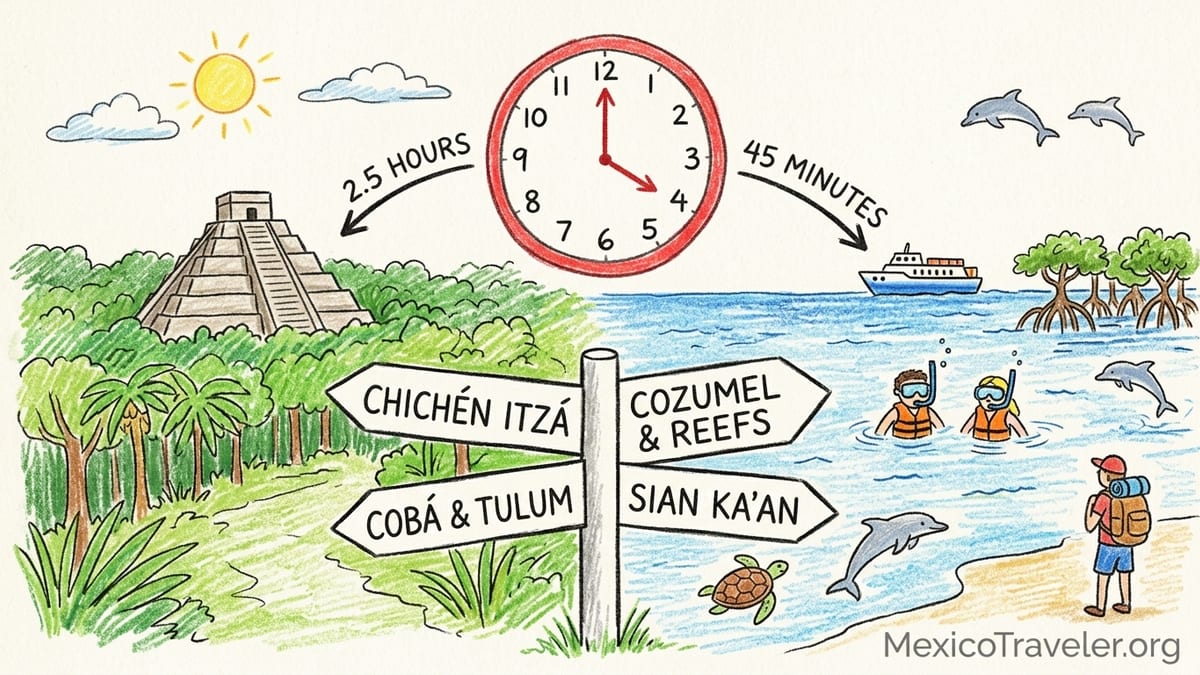
Understanding Riviera Maya Excursions: How Your Day Really Looks
Before choosing between Xcaret, Chichén Itzá, Cozumel or Sian Ka’an, it helps to picture how each excursion uses up your day. A typical transportation-inclusive full-day tour from a Riviera Maya resort runs 10 to 12 hours door to door, with hotel pickup between 6:00 and 8:00 in the morning and return around early evening. That means you should think in “whole days” rather than trying to squeeze two major outings into one.
Travel times shape everything. From Playa del Carmen, the big Xcaret parks and Río Secreto lie 10 to 20 minutes away, Tulum ruins about 45 to 60 minutes, Cobá roughly 75 to 90 minutes inland and the ferry to Cozumel 45 minutes each way once you reach the pier. Chichén Itzá requires the longest transfer, generally 2.5 to 3 hours each way by bus from the Riviera Maya, which is why it is best understood as an all-day trip to inland Yucatán, not a local Riviera Maya outing.
There are also real trade-offs between package tours and independent travel. Parks like Xcaret, Xel-Há and Xplor are usually more convenient as transportation-inclusive packages because hotel pickups are well organized and the parks are designed as single-destination days. By contrast, archaeological sites such as Tulum and Cobá, or snorkeling in Cozumel, are often more flexible and cheaper if you are comfortable using colectivos, ADO buses or the ferry and hiring a guide on arrival.
Finally, keep an eye on weather and sea conditions. Underground and jungle-based parks like Xplor or Río Secreto can run in light rain, while excursions focused on reef snorkeling in Cozumel or wildlife-spotting in Sian Ka’an are significantly affected by wind, waves and seasonal sargassum. If you only have one or two days for water activities, build in flexibility so you can switch dates if the Caribbean turns choppy.
Full-Day Cultural Journeys: Chichén Itzá, Cobá and Combined Ruins
Chichén Itzá sits in inland Yucatán state, about 180 kilometers west of the Riviera Maya, and any visit is a proper day trip outside the coastal region rather than a quick hop from the beach. Standard group tours from Playa del Carmen or Tulum advertise durations around 12 hours, with real-world pickups often starting around 7:00 and returns after 19:00. Travel time to the site is normally 2.5 to 3 hours each way, with additional stops for lunch or a cenote swim. Physically, exploring the archaeological zone means walking on uneven ground in strong sun for 2 to 3 hours, but there are no steep climbs since visitors are no longer allowed to ascend the pyramids.
On the price side, basic group tours that include round-trip transport, a certified guide and lunch without drinks often start around 80 to 100 US dollars per adult from major Riviera Maya resorts, while small-group or premium options with fewer people, drinks on the bus and upgraded meals can reach 130 to 180 dollars. Private Chichén Itzá excursions for a family or group can start in the 500 to 700 dollar range for the vehicle and guide, plus entry fees. Independent travel is feasible using an ADO bus to Valladolid or Pisté followed by a taxi, but that is best for confident travelers who are comfortable managing timetables in Spanish.
Cobá, an atmospheric site buried in the jungle, lies roughly 90 minutes inland from Playa del Carmen and just over an hour from Tulum. Many tour operators package Cobá with either Tulum ruins or a nearby cenote, giving you two archaeological experiences in about 8 to 10 hours total. Tours from the Riviera Maya typically cost 80 to 130 dollars depending on group size and extras such as bike rentals inside the site or lunch in a Maya village. Visiting independently is straightforward if you rent a car, since the parking area sits just off the highway; you pay a modest entry fee in pesos and can either walk or hire a tricycle taxi to explore the internal sacbé causeways. Physical effort at Cobá depends on whether you walk or cycle between structures, but the terrain is mostly flat.
For travelers prioritizing culture, a classic decision is whether to spend one very long day at Chichén Itzá or two shorter half-days at Tulum and Cobá. Those with kids or low heat tolerance often prefer splitting their time, since a sunrise Tulum visit combined with a cenote and a separate Cobá afternoon spreads out the exertion. If you do choose Chichén Itzá, plan it early in your stay so you can recover afterward and be realistic about the early start and late return.
Adventure Parks: Xcaret, Xel-Há and Xplor Compared
The Xcaret group of adventure parks dominates many Riviera Maya itineraries, and deciding which park to book can feel like its own project. All three main parks relevant here Xcaret, Xel-Há and Xplor function as full-day commitments once you include transfers, meals and shows. From hotels in Playa del Carmen, transfer times are about 15 minutes to Xcaret and Xplor and around 40 to 50 minutes to Xel-Há. From Cancún’s Hotel Zone, you should expect 1 to 1.5 hours each way depending on pickup routing.
Xcaret is the flagship park, blending underground rivers, cultural performances, small-scale wildlife exhibits and beach lagoons. Officially, the park runs from morning into the evening, capped by the Xcaret México Espectacular show that finishes around 21:00, so a transportation-inclusive day can easily run 12 hours. According to current operator brochures, Xcaret Plus packages that include admission, use of the Plus Area with restaurants, buffet lunch, lockers and snorkeling equipment typically price in the range of roughly 170 to 190 US dollars per adult when you add round-trip transportation from Riviera Maya hotels, with modest discounts for children and advance purchase. Basic admission without transport is cheaper in pesos on the official site, but then you must factor in a taxi or hotel shuttle on your own.
Xel-Há, located south of Akumal, focuses on all-inclusive water activities in a natural inlet. Recent price lists for 2026 show the standard “Todo Incluido” ticket around 2,300 to 2,400 Mexican pesos per adult before discounts, which converts to roughly 130 to 140 US dollars depending on exchange rates, and includes buffet food, open bar, snorkeling gear, inner tubes and river activities. Transportation-inclusive packages from a Playa del Carmen hotel usually add the equivalent of 15 to 25 dollars per person. The park is best approached as a full lazy day of swimming and snorkeling; you arrive around 9:00 to 10:00 and leave near closing time in the late afternoon. Physical effort is moderate but sustained since you will be in the water and sun for hours, so it is suitable for families as long as young children are comfortable around water.
Xplor targets adrenaline seekers with long zipline circuits, amphibious vehicles, spelunking and underground rivers. Tour brochures from 2026 list admission-only prices around the low 3,000-pesos range for adults, with transportation-inclusive day or night versions such as Xplor Fuego costing more once hotel pickups are factored in. The park day is intense rather than long, as guests tend to spend 6 to 8 hours on site, but it is physically demanding: climbing zipline towers, paddling rafts and walking on uneven cave floors. Height and minimum age restrictions apply on some attractions, often around 5 years old or a minimum height of 1.10 meters; teenagers usually love it, while very young children may not meet requirements.
All three parks allow you to visit independently by purchasing admission-only tickets and reaching the gates by taxi, rental car or colectivo. This can make sense if you are staying nearby in Playa del Carmen and prefer not to spend time on multi-stop tour buses. However, for travelers based farther north or south along the Riviera Maya or those unfamiliar with local transport, the bundled transportation packages usually offer better value once you add up taxi fares and parking, especially for families who would require two taxis each way.
Snorkeling and Diving: Cozumel Reefs, Xel-Há Inlet and Río Secreto
For pure snorkeling and diving, your main Riviera Maya decision is whether to commit a full day to Cozumel’s offshore reefs or stay on the mainland at places like Xel-Há and Río Secreto. Cozumel requires the most logistics. You must reach the ferry pier in downtown Playa del Carmen, board the passenger ferry and then meet your dive or snorkel operator on the island side. In 2026, the Xcaret-branded ferry service between Playa del Carmen and Cozumel advertises one-way adult tickets around 16 US dollars and child tickets around 12 dollars, with crossing times of roughly 45 minutes plus boarding procedures. From most Riviera Maya resorts, you should budget 30 to 60 minutes to reach the pier by taxi or transfer, which means a realistic door-to-door journey of 1.5 to 2 hours each way including waiting time.
Cozumel snorkeling and diving trips often run in two formats. The first is a half-day reef snorkel, lasting about 4 to 5 hours on the water once you are in Cozumel, with prices commonly starting around 50 to 80 dollars per person for small-group boat trips including gear, marine park fees and drinks. The second is a certified diving excursion, where two-tank morning trips with reputable local operators tend to fall around 100 to 140 dollars plus gear rental if needed. When you add ferry tickets and mainland transfers, even a “half-day” Cozumel outing uses most of your day if you are staying in Playa del Carmen or farther north, so treat it as a major excursion rather than something to squeeze in between other commitments.
Xel-Há offers a simpler alternative for casual snorkelers who are more interested in a relaxed inlet than boat rides to outer reefs. Since the all-inclusive ticket covers unlimited use of snorkel equipment, many visitors spend hours floating through the river and cove, spotting fish around rock formations and mangroves. Additional paid experiences such as sea trekking, snuba or swimming with dolphins can each add 50 to 150 dollars per person to your day if you choose them, so it is important to decide in advance whether you want to stick with the included activities or budget for upgrades.
Río Secreto, just outside Playa del Carmen, is a different kind of water adventure. Official information from the reserve indicates that a standard “Classic” underground river tour lasts about 3.5 hours on site, with the full experience including hotel pickup and drop-off from Riviera Maya resorts taking around 5.5 to 6 hours. Prices in 2026 list admission without transportation at roughly 89 US dollars for adults and 64.50 for children aged 4 to 11, while packages including round-trip transportation from Riviera Maya or Cancún rise to around 119 dollars for adults and 79.50 for children. The tour includes a wetsuit, life jacket, helmet with lamp, towels, lockers, a regional buffet and non-alcoholic drinks, but professional photos are an extra cost that can approach or exceed 100 dollars per group based on recent customer reports.
From a physical standpoint, Río Secreto involves walking and swimming through cool underground rivers over about a kilometer of uneven, sometimes slippery limestone, so a basic level of fitness and confidence in the water is essential. Minimum ages vary by tour type but typically start at 4 years old for the classic route and 7 or older for extended “Plus” trips that add biking, rappelling or ziplines. Because everything is inside a cave system, Río Secreto is less affected by surface weather than ocean-based snorkeling and operates in light rain, making it a good option when the Caribbean is too rough for comfortable boat trips.
Wildlife and Wilderness: Sian Ka’an Biosphere Excursions
Sian Ka’an is the Riviera Maya’s signature wilderness experience, spanning a huge protected area of mangroves, lagoons, coral reefs and lowland jungle just south of Tulum. Rather than a single attraction, it is an entire biosphere reserve where tours focus on different sectors, from the Muyil lagoon system to the coastal Boca Paila and Punta Allen regions. This means the exact duration, effort and wildlife you see vary significantly by excursion, so selecting the right format matters more here than with a conventional park.
Small-group tours from Tulum that combine Muyil ruins with a lagoon boat and mangrove canal float typically run about 6 hours door to door, with pickups around 6:00 to 7:00 for sunrise or early-morning departures and returns early to mid afternoon. Recent price comparisons show these experiences priced around 150 to 200 dollars per adult including transportation from Tulum, bilingual guide, boat fees, life jackets and a simple lunch or snacks. Longer coastal excursions that venture deeper into the reserve toward Punta Allen, including ocean sections where you may spot dolphins, turtles and seabirds, can last 8 to 10 hours and are among the most expensive day tours in the region, often costing 200 to 250 dollars or more per adult in small boats.
Sian Ka’an trips require comfort with basic physical effort: boarding small boats from simple docks, climbing in and out using ladders or side rails, and in the case of the famous canal float, walking a short jungle trail in life jackets before gently drifting with the current for 30 to 45 minutes. There is usually no strict minimum age, but families must judge their children’s tolerance for long bumpy drives on rough roads, heat and the absence of facilities. Many cooperatives describe their outings as suitable for children 6 and older rather than toddlers.
Weather and sea conditions matter more in Sian Ka’an than almost anywhere else in the Riviera Maya. High winds or strong waves can limit access to reef areas, make boat rides uncomfortable or, in some cases, lead to last-minute route changes where operators skip snorkeling and spend more time in sheltered lagoons instead. Seasonal sargassum can affect beaches along the coastal strip, although lagoon-based itineraries are often less impacted. For this reason, Sian Ka’an is best booked early in a longer stay so you have room to reschedule if your operator advises different dates with calmer conditions.
Independent travel into Sian Ka’an is technically possible with a rental car and careful planning, particularly for the Muyil sector where you can pay for a lagoon boat at the local pier, but it comes with real challenges. Road signage is limited, mobile coverage is patchy and access rules are strictly enforced to protect the reserve. For most visitors, especially first-timers, booking with a reputable cooperative or eco-operator that includes transportation, permits and a naturalist guide is well worth the premium over trying to piece everything together on your own.
Archaeological Half-Days and Family-Friendly Experiences
Not every Riviera Maya excursion needs to consume a full day. For many travelers, mixing one or two signature all-day adventures with shorter half-day outings around Tulum or Playa del Carmen leads to a more relaxed holiday, especially with young children or older family members. The classic short cultural trip is Tulum’s seaside archaeological site, which can be visited in about 2 hours on-site plus transfers. From Playa del Carmen, group tours featuring Tulum alone are often marketed as 5-hour experiences door to door, with prices starting around 50 to 70 dollars per adult including air-conditioned transport and a guided walk through the ruins.
Visiting Tulum independently, however, is straightforward and can be much cheaper. Colectivos and ADO buses from Playa del Carmen and Cancún drop passengers near the access road, from where you either walk or take a short local shuttle to the entrance. Once there you pay a modest entry fee in pesos and can hire a certified guide at the gate if you wish. Independent visitors can easily combine Tulum ruins with a nearby public beach or a swim in a cenote such as Gran Cenote, making this one of the most flexible low-cost cultural days in the region.
For families, the choice between Xcaret, Xel-Há and Xplor often comes down to minimum ages, stamina and attention spans. Xcaret is easiest with mixed-age groups because it has shaded paths, gentle river floats and cultural shows where grandparents can sit comfortably while children watch traditional dances and horse performances. Xel-Há works well if everyone enjoys being in the water and is comfortable with life jackets, while Xplor is best reserved for teenagers and active adults who will appreciate the long zipline runs and higher physical demands. Río Secreto offers a middle ground for families with older children who can follow safety instructions in a cave environment.
Other half-day experiences include short cenote swims near Tulum or Puerto Aventuras, quick snorkeling trips to shallower reefs off Akumal where guests hope to see turtles, and compact wildlife outings like early-morning birdwatching walks in jungle reserves. Many of these can be booked directly from local operators in person a day or two in advance, giving you flexibility to match your plans to the weather and how everyone is feeling rather than locking in every hour before you arrive.
Packages, Prices and When to Book Tours vs Going Solo
Once you know which experiences interest you, the next decision is how to book: basic admission, transportation-inclusive packages, guided group tours or private excursions. For the Xcaret parks, buying directly from the operator in advance usually yields the best base prices in Mexican pesos, especially when promotions or multi-park bundles run. A typical example reported by recent visitors is a three-park package Xcaret Plus, Xel-Há and Xplor Fuego with food, drinks and round-trip transportation bundled for around 350 US dollars per person when purchased several months ahead. In contrast, buying single-day tickets with transport separately from third-party resellers at your hotel desk can inflate the total cost.
For archaeological sites like Tulum and Cobá, the value calculation leans more toward independent travel if you are reasonably comfortable navigating on your own. ADO bus tickets from Playa del Carmen to Tulum, for instance, are modest enough that a couple or family can pay far less than a packaged tour, even after adding site admission, a local guide and a shared taxi to a cenote. On the other hand, Chichén Itzá’s distance and the complexity of coordinating multiple legs of public transport make a good-quality group tour or private driver a far more attractive option unless you are a very experienced traveler.
Sian Ka’an and Río Secreto sit in a middle ground. Their access roads, conservation rules and safety requirements make formal tours highly advisable over improvising with taxis. With Río Secreto, the question is more whether to pay extra for a transportation-inclusive package. If you are staying in central Playa del Carmen, a short taxi ride might be cheaper than the per-person transportation add-on, especially for a couple. For Sian Ka’an, however, the per-person charges for small-boat tours mainly reflect operating permits and guide expertise rather than just transportation, so trying to save by piecing together your own itinerary rarely pays off.
Timing also matters. High season around Christmas, New Year, Easter and summer school holidays sees popular excursions such as Xcaret, Cozumel diving and Sian Ka’an boat tours fill up days or weeks in advance. In those periods you should book key days before you travel, ideally with refundable or date-flexible options so you can respond to weather forecasts once you are on the ground. In shoulder and low seasons, you can often reserve only your top one or two priorities ahead of time and leave gaps in your schedule for last-minute ideas suggested by hotel staff or fellow travelers.
Three-Day, Seven-Day and Single-Excursion Itineraries
For a three-day stay in the Riviera Maya, you have to be selective. One balanced approach for first-time visitors staying in Playa del Carmen might look like this. On Day 1, visit Xcaret or Xel-Há on a transportation-inclusive package, giving you a soft landing with organized logistics, food included and a wide range of activities without decision fatigue. On Day 2, head to Tulum ruins independently, combining an early-morning archaeological visit with a few relaxed hours at a beach club or cenote. On Day 3, choose between a half-day Río Secreto excursion if you want adventure in the caves or a relaxed afternoon exploring Playa del Carmen’s own beaches and downtown, leaving some unstructured time before departure.
With seven days, you can layer in more ambitious day trips. One sample week for an active couple might start with Xplor for a high-adrenaline park day, followed by a slower beach and shopping day to recover. Mid-week, schedule Chichén Itzá on a quality small-group tour, accepting that it will be a long, tired day, and follow it with a low-key cenote or spa afternoon. Later in the week, book a Cozumel reef snorkeling or diving trip, again preferring small groups or reputable dive shops, and dedicate another day to Sian Ka’an with a lagoon or coastal boat excursion from Tulum. Leave your final day relatively open for last-minute choices, shopping or returning to a favorite beach.
Travelers who can afford only one major paid excursion have a tougher call, and the right answer depends on personal interests. If you want one day that “feels like Mexico” in a broad sense, Xcaret stands out because it mixes nature, folk performances, pre-Hispanic replicas and the evening show that many visitors describe as a highlight of their trip. If you are primarily a water and snorkeling enthusiast, particularly if you have some previous experience, a Cozumel reef trip will deliver the most memorable marine life. History lovers who may not return to the region should strongly consider investing in Chichén Itzá despite the long bus ride, while dedicated nature travelers might prioritize Sian Ka’an for its combination of wildlife and wild, lightly developed landscapes.
Regardless of which structure you choose, aim to avoid stacking your most demanding days back-to-back. A common mistake is booking Xplor one day and Chichén Itzá the next, leaving everyone exhausted halfway through the trip. Instead, alternate “big” days with easier ones, and remember that the Caribbean heat makes everything more draining than it looks on paper.
The Takeaway
Choosing the best Riviera Maya excursion is less about chasing a checklist of attractions and more about matching each day’s demands to your energy, budget and interests. Chichén Itzá is a rewarding but long cultural day outside the Riviera Maya, better for adults and older children who can handle several hours on the bus. Xcaret, Xel-Há and Xplor function as self-contained park days, with transport-inclusive packages offering good value if you pick the park that fit your group’s ages and appetite for adrenaline.
Cozumel, Río Secreto and Sian Ka’an highlight three different faces of the region’s natural world: open-ocean reefs, subterranean rivers and protected wetlands. All are worthwhile, but each requires different logistics and is differently sensitive to weather and sea conditions. Shorter half-day outings to Tulum, Cobá or local cenotes provide breathing room around those big-ticket days and help keep a week-long stay varied rather than exhausting.
If you plan around actual tour durations, transfer times and what is truly included in the price rather than glossy marketing alone, you can build an itinerary where every excursion feels intentional. Whether you opt for one showpiece day at Xcaret, a deep dive into Maya history or a sunrise boat across Sian Ka’an’s lagoons, the Riviera Maya rewards travelers who slow down enough to savor each experience in full.
FAQ
Q1. Is it better to book Xcaret, Xel-Há or Xplor with transportation included?
For most visitors staying outside central Playa del Carmen, booking transportation-inclusive packages to the Xcaret parks is usually better value and less stressful than arranging separate taxis both ways, especially for families. If you are based near downtown Playa del Carmen and comfortable hailing local taxis or using colectivos, admission-only tickets combined with a short ride can save money and reduce time spent on multi-stop resort pickups.
Q2. How long does a Chichén Itzá tour from the Riviera Maya really take?
From most Riviera Maya resorts, group tours to Chichén Itzá last around 12 hours door to door. Expect a pickup between 6:30 and 8:00, about 2.5 to 3 hours of driving each way, 2 to 3 hours at the site itself and additional time for a lunch stop and often a cenote swim. It is a full-day outing to inland Yucatán, not a quick local side trip.
Q3. Is Cozumel snorkeling doable as a half-day from Playa del Carmen?
Snorkeling boat trips in Cozumel are often marketed as half-day tours once you are on the island, but when you include transfers from your hotel to the Playa del Carmen pier, the ferry crossing both ways and meeting your operator, you should plan for most of the day. In practice, you will be away from your Riviera Maya resort for 7 to 9 hours even with a morning-only snorkel.
Q4. Which excursions in the Riviera Maya are best for young children?
Xcaret is a strong choice for families with young children because it offers shaded areas, gentle river floats, aquariums and shows where kids can sit and watch. Xel-Há also works well if children are comfortable in life jackets and enjoy being in the water. Tulum ruins combined with a calm cenote is a manageable cultural half-day. Xplor, Cozumel diving and longer Sian Ka’an boat trips are better suited to older children and teenagers who can handle more physical effort and long transfers.
Q5. How weather-dependent are Sian Ka’an and Cozumel tours?
Sian Ka’an and Cozumel reef trips are particularly sensitive to wind, waves and seasonal sargassum. High winds can make boat rides rough or lead operators to modify routes, skipping exposed reef areas. Heavy sargassum can affect beach quality and nearshore visibility. Whenever possible, schedule these tours early in your stay with flexible booking conditions, so you can adjust your day based on updated marine forecasts.
Q6. Can I visit Tulum and Cobá without a tour?
Yes. Many travelers visit Tulum and Cobá independently using ADO buses, colectivos or rental cars. At both sites you pay the entry fee in pesos and can hire a certified guide at the entrance if you want context. This approach is usually cheaper than group tours and lets you set your own pace, but you must be comfortable reading schedules, arranging local transport and carrying cash for admissions.
Q7. Is Río Secreto suitable if I am not a strong swimmer?
Río Secreto provides mandatory life jackets and operates as a guided tour in small groups, which makes it accessible to people who are not strong swimmers but are comfortable in the water. However, you should be able to walk on uneven ground, climb short steps and manage cool water temperatures in a cave environment. If you dislike enclosed spaces or have mobility issues, this might not be the best choice.
Q8. What is the difference between basic admission and “all-inclusive” at Xel-Há?
At Xel-Há, the standard “all-inclusive” ticket already covers entry, unlimited buffet meals, snacks, open bar, non-motorized activities and snorkel equipment. Some operators also sell premium options that bundle one additional paid activity such as a snuba dive or zipline upgrade. When comparing prices, check carefully whether you are looking at admission-only figures in pesos or transportation-inclusive packages, and whether any premium experiences are included or extra.
Q9. Are private tours worth paying for in the Riviera Maya?
Private tours cost considerably more, but they can be worthwhile for groups that value flexibility and space, or for trips such as Chichén Itzá and Sian Ka’an where leaving earlier than large groups helps you avoid crowds and midday heat. A private driver and guide also make it easier to tailor the day to older relatives or young children. For solo travelers or couples on a budget, good small-group tours are usually a better value.
Q10. How far in advance should I book major excursions?
In peak seasons like Christmas, New Year, Easter and summer holidays, you should reserve popular excursions such as Xcaret, Chichén Itzá, Cozumel diving and Sian Ka’an at least a few weeks in advance, prioritizing dates that fit your overall plan. In shoulder seasons, booking a few days to a week ahead is often enough. When possible, choose options with free date changes so you can swap days if the weather or sea conditions deteriorate.