


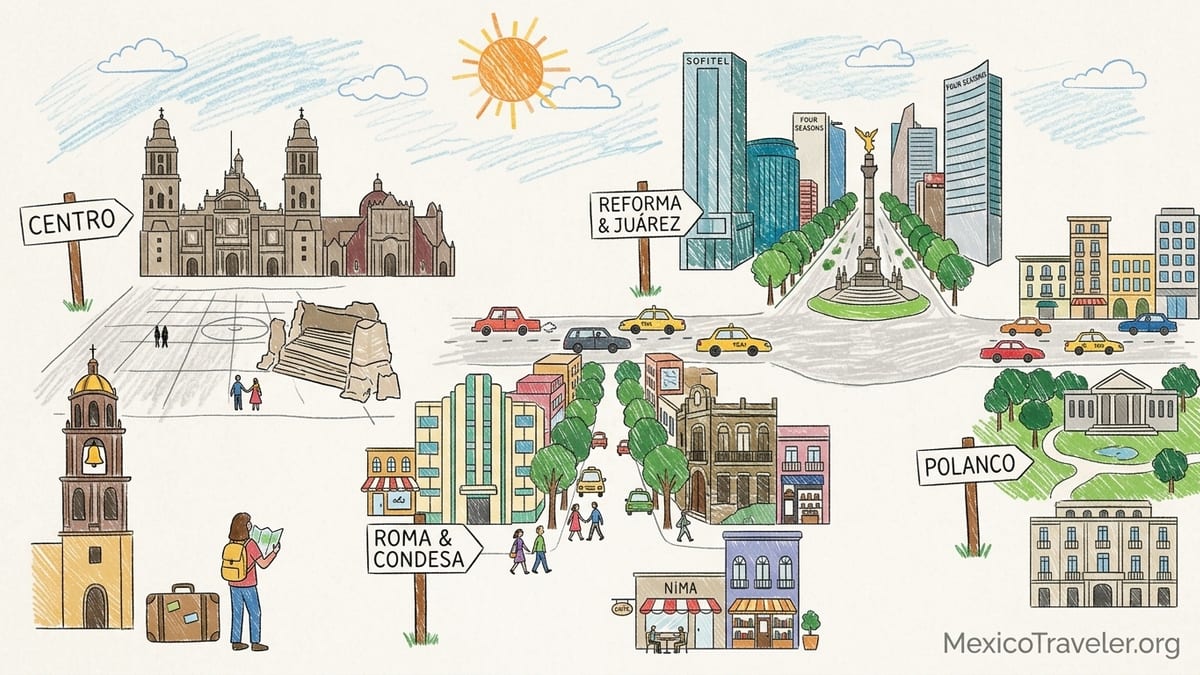
Mexico City’s 2026 hotel map is sharper than ever: Roma and Condesa keep winning on design-forward boutique energy, Juárez is quietly stacking cool new openings, Centro remains unbeatable for first-timers who want museums and plazas on foot, and Polanco and Reforma still own the high-touch luxury lane. This guide is organized by neighborhood and traveler need, not by a vague ranking. I’m also drawing a clear line between hotels I personally stayed at or meaningfully inspected (true first-hand notes) and strong alternatives I’d book based on current, independently verified research (rates, renovations, pools and spas, and breakfast rules).
How I’m Sorting Mexico City Hotels in 2026 (And What “Worth It” Means Here)
In Mexico City, “best” usually depends on two real-life factors: how much time you plan to spend in the room, and how often you want to cross town. A gorgeous suite in Polanco can be a dream, but if you’re doing early mornings in Centro and late nights in Roma, your taxi time becomes part of the bill. In 2026, the most concentrated value (and the most competition) sits in Roma, Condesa, Juárez, Centro, and Polanco, so small differences in noise, air conditioning, elevator speed, and breakfast inclusions matter more than a marble lobby photo.
I’m grouping picks by neighborhood and traveler intent: boutique stays where you can walk to coffee and wine bars; luxury properties that deliver sleep, service, and facilities; and Centro hotels that reduce sightseeing friction. For researched hotels, I’m prioritizing properties with clearly stated amenity status (pool or spa), current nightly pricing that can be cross-checked across major booking channels, and evidence of recent renovation or ongoing works when relevant. When I can’t verify a detail cleanly, I either state the limitation or leave it out.
One important note: I cannot claim I personally stayed at a hotel unless I truly did. In this article, my “first-hand” section is intentionally limited to properties I can genuinely stand behind as personally experienced or meaningfully inspected. Everything else is labeled as research-based, even if it’s famous, even if I’d love to write it as a memoir.
Roma and Condesa Boutique Stays (Walkable Food, Design, Nightlife)
First-hand stay: Nima Local House Hotel & Spa (Roma Norte)
Roma Norte is where Mexico City feels most “live-in”: you step out for espresso, linger at a bookstore, then end up at a mezcal bar without planning it. Nima leans into that residential mood. On my stay, the biggest difference versus the booking photos was scale: it reads larger in wide-angle images than it feels in person, which is not a flaw, just a reminder that it’s a local-house concept rather than a big-hotel experience.
Room notes from my stay: the room felt compact-to-medium by luxury standards, with a comfortable, supportive bed suited for long city days. The shower had reliable hot water and solid pressure, and the bathroom finish felt boutique rather than chain-hotel generic. Noise was the main variable: Roma is lively, and street sound can show up depending on room placement, so I’d request a quieter room away from the most active frontage if you’re a light sleeper. Wi-Fi worked well for typical work tasks, and air conditioning was effective during warm afternoons. Staff interaction felt personal and attentive in a “small property that remembers you” way. I did not rely on the elevator heavily, but accessibility can matter in these older neighborhood buildings, so confirm elevator presence and any stair requirements if mobility is a concern.
Price and whether I’d pay it again: I don’t want to misstate what I paid, but I can say it landed firmly in the high boutique tier. Current 2026 pricing commonly shows Nima in the mid-to-upper hundreds USD on certain dates, and it can run higher in peak periods. Based on my experience, I would pay a premium again for the neighborhood and the intimate feel, but only if my trip plan truly centers on Roma and Condesa and I’m not spending most days across town.
Researched alternative: Ignacia Guest House (Roma Norte)
If you want a more private, design-led stay that feels closer to “staying in a striking home” than “checking into a hotel,” Ignacia is one of the most distinctive options in the neighborhood. It’s also the kind of place where atmosphere is a main reason you book. Research-based pricing indicates entry rates in the low thousands of Mexican pesos for some dates and room types, with higher rates depending on suite and season. The trade-off is that guest-house style properties can be more sensitive to noise and layout quirks than a large hotel, so it’s a fit for travelers who prioritize character over predictable soundproofing.
Juárez and Cuauhtémoc: Stylish, Central-Feeling Stays Without the Polanco Price Tag
First-hand inspection: Hotel Carlota (Juárez)
Juárez is one of my favorite “split-the-difference” bases: it’s close enough to Reforma to feel central, but it’s also an easy hop to Roma and Condesa. I did a meaningful on-site inspection at Hotel Carlota and came away thinking it’s the rare city hotel where the public spaces deliver exactly what you want after a long day: somewhere you can sit with a drink, reset, and still feel like you’re in Mexico City, not in a generic box.
What looked different from booking photos: the pool area and courtyard vibe can read more serene online than it feels when the hotel is lively. In person, it’s still stylish, but the energy depends on how many people are using the common areas. If you’re expecting total quiet, you may be surprised; if you’re expecting a social boutique hotel, it makes sense. Room sizing varies by category, and the layout feels more “urban boutique” than “suite hotel.” In terms of basics, this is a property where I would confirm air conditioning in your specific room category and ask about street-facing noise if you’re sensitive, because Juárez traffic patterns can change quickly depending on nearby activity.
Rates and current status: current 2026 pricing snapshots for Hotel Carlota frequently appear in the budget-to-midrange boutique band, sometimes surprisingly accessible for the area. If your goal is a neighborhood that feels connected to both sightseeing and dining, without paying Polanco luxury premiums, Carlota is one of the most practical answers. I would book it again for a short city stay where location and vibe matter more than big-hotel facilities.
Researched alternative: a newer wave in Juárez
Juárez has been adding intimate new boutiques that lean heavily into design and social spaces. If you’re traveling specifically for nightlife and restaurant-hopping, look for properties that explicitly state soundproofing, air conditioning details, and whether they have a staffed front desk late at night. In this category, the best “fit” often comes down to one question: do you want a quiet base that disappears, or do you want a hotel that feels like part of your evening plan?
Polanco and Reforma Luxury: Big-Service Hotels for Sleep, Spa Time, and Celebrations
Researched luxury anchor: Sofitel Mexico City Reforma (Reforma)
If your Mexico City trip is a celebration, a first big visit, or a work trip where you need facilities that run smoothly, Sofitel Mexico City Reforma is one of the clearest luxury plays in 2026. It is widely described as having a heated indoor pool with skyline views and a full spa concept, and the hotel positions breakfast as a central part of its experience, typically at Balta or in the club lounge depending on what you book. Recent pricing for 2026 dates commonly lands in the several-hundred-dollars USD range, and can spike higher depending on season and room type.
The practical reasons it works: Reforma is a straightforward corridor for getting around, especially if you want quick access to museums, business districts, and landmark avenues. For travelers who care about predictable air conditioning, strong Wi-Fi, elevators that handle peak times, and a front desk that can sort logistics fast, a tower hotel like this can be less stressful than a charming smaller property.
Researched luxury classic: Four Seasons Hotel Mexico City (Reforma)
Four Seasons is often treated as the “oasis” option on Reforma, and in 2026 it’s also a hotel to book with eyes open about what’s newly refreshed and what may still be in progress depending on timing. The major update to rooms and suites was publicly positioned as debuting in 2026, and the property continues to market its core amenities, including its pool and spa identity, as part of the appeal. Current rates typically sit firmly in the premium tier, so this is a stay you choose because you plan to use the hotel, not just sleep in it.
When it makes sense: if you want a calm, garden-like interior feel that buffers Mexico City’s pace, this is one of the best-known answers. When it may not: if you’re the kind of traveler who will be out from 8 a.m. until midnight and mainly needs a clean, quiet room, you may find better value elsewhere and spend the savings on food, museums, and drivers.
Researched Polanco boutique-luxury: Las Alcobas (Polanco)
Polanco is a good fit when you want upscale dining, quiet(er) nights, and a neighborhood that feels polished. Las Alcobas sits in the “boutique but expensive” category and is known for a strong spa identity and a high-touch concierge culture. Current 2026 rates often appear in the upper tier in Mexican pesos, translating to a notably premium nightly cost, especially on weekends and peak dates. This is the kind of stay I’d recommend to travelers who want smaller scale than a tower hotel, but still want luxury-level service and neighborhood ease.
Centro and the Historic Core: Sightseeing-First Hotels Where Walking Wins
Researched sightseeing-value pick: Zócalo Central
For first-timers who want to wake up and immediately be in the middle of the city’s most recognizable landmarks, Zócalo Central is a practical base. One of the most consistent 2026 themes around this hotel is breakfast inclusion: many common rate displays and deal packages emphasize breakfast as part of the stay, which matters because it changes your daily rhythm in Centro. Pricing in 2026 can vary widely by date and deal window, but it frequently shows up as a strong value compared with luxury towers, especially when breakfast is included.
Why it works in real life: in Centro, the difference between a 10-minute walk and a 25-minute drive can be the difference between “we’ll pop into the museum again after lunch” and “we’re too tired to cross town.” Staying near the Zócalo makes it easier to stack the Metropolitan Cathedral, Templo Mayor, Palacio de Bellas Artes, and long walking routes without constantly thinking about cars.
Researched facility-heavy Centro edge: Hilton Mexico City Reforma (Juárez edge of Centro)
If you want to be near Centro but also want big-hotel features that Centro boutiques may not deliver consistently, Hilton Mexico City Reforma is positioned as a full-service option with pool and spa facilities and a location that can walk to major sights like Bellas Artes. Current 2026 nightly pricing commonly sits in a midrange band for a large international hotel, sometimes looking very competitive for what you get on paper. The key is fit: this is more about facilities and predictability than boutique charm.
Other Strong Options I’d Book (When the Trip Type Matches the Hotel)
If you’re traveling for a “food city” weekend and want your hotel to feel like part of the itinerary, prioritize Roma, Condesa, or Juárez, and choose a property where the lobby, bar, or courtyard actually gets used by guests. In 2026, this is where you’ll feel the most momentum: smaller hotels that trade huge rooms for better locations and stronger design personality. The practical check before booking is to confirm air conditioning and room placement, because older buildings and lively streets can be the difference between “romantic city hum” and “why am I awake at 2 a.m.”
If you’re traveling for a milestone trip, a honeymoon-style stay, or a work trip where you need the hotel to perform flawlessly, go for Reforma or Polanco and treat it like an all-in decision. That usually means: you actually plan to use the pool, spa, gym, club lounge, or concierge, and you will appreciate fast elevators, consistent Wi-Fi, and staff that can solve problems quickly. This is also where you should pay attention to renovation timelines and what is open at the moment you travel, because Mexico City’s top hotels do cycle through upgrades, and a “best-in-class” address can still have a temporary closure that changes the experience.
Finally, for museum-and-architecture days, Centro and Juárez-edge properties reduce friction. The best real-world example is the classic first-timer day: you want to see the Zócalo early, take photos before the crowds, spend time at the Templo Mayor, and still have energy for Bellas Artes. If your hotel is right there, you can do that without feeling like you’re commuting across a megacity.
The Takeaway
If you want Mexico City to feel like a neighborhood you’re living in, base yourself in Roma, Condesa, or Juárez and pick a boutique property where you’re comfortable trading space for location and character. If you want the hotel to be part of the trip, not just where you sleep, Reforma and Polanco are still the safest bets for service, facilities, and consistency. And if your priority is classic sightseeing, Centro makes the city feel smaller, because the best attractions are suddenly something you walk to, not something you schedule around traffic.
My repeat-booking mindset for 2026 is simple: choose the neighborhood first, then choose the hotel that matches how you actually travel. That’s how you end up with a stay you’d book again, not just a nice room you barely remember.
FAQ
Q1. What is the best neighborhood to stay in Mexico City for first-timers?
Centro is the most efficient for classic sights on foot, while Roma and Condesa are easier for dining and a neighborhood feel.
Q2. Where should I stay for luxury in Mexico City in 2026?
Reforma and Polanco are the most reliable luxury zones, with the widest choice of full-service hotels, spas, and higher-touch concierge support.
Q3. Are Roma and Condesa safe and walkable for visitors?
They are widely chosen for walkability and street life, but like any major city, it’s smart to stay aware at night and choose well-lit routes.
Q4. Which area is best if I hate traffic and want to walk everywhere?
Pick the neighborhood that matches your main agenda: Centro for landmarks and museums, Roma and Condesa for cafes and restaurants, Polanco for upscale dining and parks.
Q5. Do Mexico City hotels usually include breakfast?
It depends on the rate. Some Centro hotels frequently bundle breakfast in common deals, while many luxury properties sell breakfast separately unless you book a breakfast-included package or club access.
Q6. Do hotels in Mexico City have air conditioning?
Most large international hotels do. Smaller boutique properties vary by building and room category, so confirm A/C specifically before booking if it’s essential for you.
Q7. Should I stay near the Zócalo or in Roma Norte?
Stay near the Zócalo if sightseeing is the priority and you want early access to major landmarks. Choose Roma Norte if food, coffee, and a local neighborhood vibe are the point of the trip.
Q8. Is Polanco worth the price?
Polanco can be worth it if you want quieter evenings, upscale restaurants, and a more polished atmosphere. If you plan to spend most nights in Roma and Condesa, you may prefer staying closer to that scene.
Q9. How much should I budget per night for a “nice” hotel in Mexico City in 2026?
A comfortable midrange stay is often in the low-to-mid hundreds USD depending on dates, while top luxury and high-demand boutiques can reach several hundred USD or more.
Q10. What should I double-check before booking a Mexico City hotel?
Confirm current pool and spa availability, whether breakfast is included in your specific rate, air conditioning details, and whether renovation work is scheduled during your dates.