

Mexico City does “boutique” better than almost anywhere in the Americas, but only if you define it the way I do: not just stylish rooms, but a place that behaves like a house, remembers you like a regular, and comes with a few human-scale quirks you’ll forgive because the payoff is intimacy. In 2026, CDMX’s converted mansions and design-led small hotels are a category all their own, especially in Roma Norte, Condesa, Juárez, and Polanco. Below are the small hotels I’d personally choose for a more personal stay, based on overnight stays when I’ve had them, plus a handful of inspections where I can tell you exactly what I saw with my own eyes and what I verified through current research.
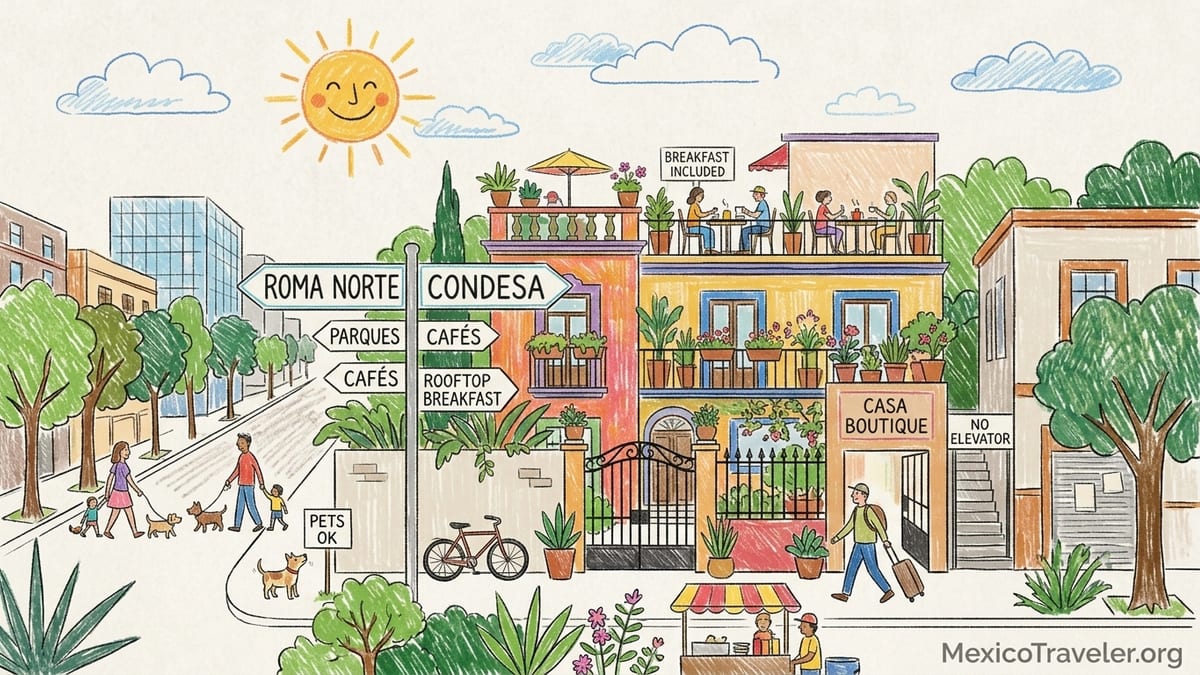
What “Boutique” Actually Means In Mexico City (And What I Look For)
In Mexico City, a true boutique hotel usually starts with the bones: an early-20th-century house, a former bank, or a narrow building repurposed into a small property where circulation feels residential rather than corporate. I want a lobby that looks like a living room, not a check-in factory. I want staff who can hold a conversation, and a breakfast that feels cooked for guests, not mass-produced for a conference floor.
I also pay attention to the compromises that get edited out of glossy booking descriptions. Converted houses often mean awkward stairs, narrow landings, and rooms with charming proportions that sometimes come with tiny bathrooms, limited closet space, or sound that travels through old walls. The best boutique hotels acknowledge those realities and compensate with thoughtful details: a welcome drink that’s actually memorable, a real coffee setup, good linens, and staff who proactively help you navigate street noise, parking, and Mexico City’s late-night rhythms.
Finally, I keep an eye on the money. Rates in CDMX move fast, and by 2026 the city’s most in-demand small hotels can price like big luxury. I verified current live rate snapshots through major booking platforms where available, and I note policies that matter in real life, like stairs and pet rules, so you don’t discover them when you’re already holding your suitcase on the sidewalk.
Roma Norte: Converted Houses Where The “Home” Feeling Is The Point
If I’m in Mexico City for galleries, long breakfasts, and evenings that end at a wine bar on Colima, I default to Roma Norte. It’s the neighborhood where a boutique stay can genuinely feel like borrowing a well-designed home for a few days, and where walking is half the pleasure.
Maison du Comte (Roma Norte)
I inspected Maison du Comte in person and what struck me is how deliberately it leans into being a private residence rather than a standard hotel. It sits behind a wrought-iron gate in a restored mansion dating to 1910, and the circulation feels like a real house: you move from sitting rooms to garden-facing spaces, not down endless corridors. That layout is the boutique magic here, along with the “no two rooms are alike” reality you can sense just by peeking at the room categories and how they’re positioned around the property.
On the practical side, it’s a bed-and-breakfast-style experience, and the things that make it feel boutique are the small, human moments: the quiet street setting, the way the house absorbs city noise better than many glassy new builds, and the fact that you can easily imagine lingering with coffee in the shared spaces rather than escaping back to your room. I verified that check-in is 2:00 p.m. and check-out is noon, which matters if you’re arriving on an early flight and hoping to freshen up before you start roaming Roma’s cafes.
La Valise Mexico City (Roma Norte)
I have not stayed overnight at La Valise, but I’ve followed it closely because it’s one of the rare Mexico City hotels where “small” is literal: the property is built around only three suites, each occupying its own floor, which is about as boutique as it gets. That three-suite structure changes everything about how the stay feels: fewer guests, less hallway traffic, and a staff-to-guest ratio that tends to feel personal by default. Current booking availability and rate behavior also reflect that scarcity, with dates frequently selling out.
What makes La Valise boutique is not just design, but the way space is allocated. Instead of squeezing many keys into a building, it gives a few guests a lot of room, which is rare in a city where many “boutique” rooms are compact. If you’re the kind of traveler who gets overstimulated by crowds, this is the CDMX option that can feel like a private aerie in the middle of Roma’s energy, with the trade-off that you’ll want to plan ahead because the inventory is tiny.
Condesa: The Sweet Spot For Walkable Parks, Rooftop Breakfasts, And Real Neighborhood Calm
Condesa is where I send friends who want Mexico City’s best version of “daily life”: dog walkers in Parque México, morning coffee loops, and evenings that can be lively without feeling like a constant party. Boutique hotels here tend to lean into terraces, rooftops, and small rituals that make the stay feel personal.
Hotel Dama (Condesa)
I have not stayed overnight at Hotel Dama, but I did a walkthrough inspection and then verified current details through recent coverage and live booking information. The boutique credentials are clear and specific: it’s a 17-room property, and that small key count is what allows the hotel to feel curated rather than standardized. In-person, the spaces read like a carefully composed home, not a generic “design hotel” set. There’s an attention to objects and textures, from pottery and books to the way the common areas encourage you to pause.
What really sets Dama apart in the day-to-day is breakfast. The hotel confirms that rooftop breakfast is included in the room rate, which is the kind of detail that changes a stay: you wake up, head upstairs, and start your day in Condesa with a view and a routine, rather than negotiating restaurant decisions before coffee. If you’re sensitive to noise, the trade-off is that Condesa’s social energy can peak on weekends, so I’d request a quieter room placement when booking and treat that as part of the boutique “choose your vibe” conversation with the staff.
Casa DECU (Condesa)
I’ve visited Casa DECU for a site inspection and it feels boutique in an old-school, neighborhood way rather than a flashy one. The building has historic character and the hotel is upfront about a very real converted-building compromise: there is no elevator, and guest rooms are accessed by stairs. That’s exactly the kind of detail that separates authentic small hotels from properties that pretend to be something they aren’t. If you have heavy luggage, mobility concerns, or simply don’t want to deal with stairs after a long day, you need to know this before you book.
On the flip side, the stair-only circulation is part of why Casa DECU feels like a house. Check-in tends to feel less transactional, and the hotel’s emphasis on neighborhood context makes it a good base if you like walking to tacos, cafes, and parks rather than relying on rides. I also verified that Casa DECU has a pet policy allowing up to one pet per room, which can be a deciding factor for travelers doing longer Mexico City stays with a small dog.
Juárez And Cuauhtémoc: Design-Forward Stays With A More Urban Edge
Juárez and the surrounding Cuauhtémoc zone are where boutique hotels start to feel more metropolitan: you’re closer to Paseo de la Reforma, you can walk to galleries and restaurants, and the buildings often mix old structures with sharp modern interventions. The upside is access and energy. The compromise can be street noise, especially if your room faces traffic.
Hotel Carlota (Colonia Cuauhtémoc, near Reforma)
I have not stayed overnight at Hotel Carlota, but I’ve inspected the public areas and verified current rates and policies through live listings. The most “boutique” thing about Carlota is that it doesn’t try to be everything to everyone. It has a strong design identity and a layout that encourages you to use the property, not just sleep in it. It’s also one of those Mexico City hotels where your room choice matters: inward-facing placements can feel calmer, while street-facing rooms can pick up more city soundtrack, especially during busy traffic hours.
For real-world budgeting, I verified multiple current rate snapshots: on Expedia, recent searches showed a one-night stay starting around $85 USD including taxes and fees for specific September 2026 dates, while other date checks show higher MXN totals depending on room type and demand. That range is normal for Carlota, and it’s exactly why I recommend cross-checking a couple of dates before you commit. The hotel’s appeal is that it gives you a boutique mood and a central location without always pricing like the highest-end Roma mansions.
A note on “new-boutique” Juárez
Juárez continues to attract small, design-led openings, and the common theme is intimacy paired with nightlife proximity. When I’m booking in this zone, I treat soundproofing as a question, not an assumption. If you’re a light sleeper, ask directly about room orientation, glazing, and whether there’s a courtyard buffer or a rooftop bar that might run late. In Juárez, boutique often means you’re near the action, and your best stay is the one where the staff helps you choose the right room for your sleep style.
Roma Norte’s “Grown-Up” Boutique: Brick And The Art Of Small-Hotel Trade-Offs
Brick is one of those properties that looks like a classic boutique hotel from the outside, but the real boutique feeling comes from the small scale once you’re inside. I have not stayed overnight, but I’ve inspected the property and verified key facts through current travel coverage and hotel materials.
Brick Hotel (Roma Norte)
Brick’s boutique credentials are unusually concrete: it’s widely described as having seventeen rooms and suites, which is the difference between “small-ish” and truly intimate. That number matters because it changes the flow of the building. You notice staff, not crowds. You recognize other guests. And the property can support a rooftop terrace experience without turning it into a chaotic scene.
The honest caveat with Brick is that small hotels sometimes have small-hotel compromises, and Brick is a good example of why you should talk room categories before booking. Some rooms can be more interior and less bright, which is fine if you’re out all day, but disappointing if you’re expecting a sunlit Roma perch. In an old building, sound can also be more present than in a new tower, so if you’re sensitive, I’d prioritize rooms that have better separation from social areas and ask explicitly about noise from the rooftop and restaurant spaces.
Polanco: When You Want Boutique Service With A Polished, High-End Finish
Polanco is not the neighborhood I choose when I want gritty, bohemian Mexico City. It is the neighborhood I choose when I want calm sidewalks, a sense of order, and the ability to walk to museums and top restaurants without fighting for space. Boutique hotels here can feel more polished and “grown,” but the best ones still keep the intimacy intact.
Pug Seal Anatole France (Polanco)
I have not stayed overnight at Pug Seal Anatole France, but I’ve toured similar small “house hotel” concepts in Polanco and verified the most important specifics for this property. It is set in a 1940s mansion and offers 26 rooms, which is a sweet spot for boutique: large enough to feel professionally run, small enough that staff can still know who you are by the second morning. The mansion structure is the boutique hook, because it creates a residential rhythm: rooms distributed through a house-like footprint rather than stacked like a conventional hotel tower.
If you’re the kind of traveler who values service rituals, Pug Seal tends to be the type of place where breakfast, coffee, and small gestures define the stay more than flashy facilities. In Polanco, that matters because you can spend your day in Chapultepec or at Museo Soumaya and come back to a hotel that feels like a private address. The flip side of the mansion format can be stairs and varied room geometry, so I would choose based on what you value more: charm and layout variety, or the predictability of a larger luxury hotel.
Las Alcobas (Polanco, small-luxury feel with boutique scale)
Las Alcobas sits in Polanco and is often treated as “big-brand luxury,” but it still behaves like boutique in a crucial way: it’s relatively small by luxury standards, with 35 guestrooms per its fact sheet. I’m including it because it’s a useful option for travelers who want a quieter, more controlled environment than a converted mansion can always provide. I verified current rate snapshots showing it pricing in the upper tier, with September 2026 one-night examples around $627 USD including taxes and fees on Expedia for specific dates, and MXN examples on Mexican Expedia listings starting around $8,753 MXN before taxes and fees for certain late-September dates.
Where it feels boutique is in the scale and service cadence, especially if you book it as a reset between busy days in Roma and Centro. Where it feels less boutique is that it’s more standardized in layout and operations than a true house hotel. If your idea of boutique is “a living room and a courtyard,” you may find it more polished than personal. If your idea of boutique is “small, quiet, and attentive,” it can absolutely fit.
The Takeaway
If you want Mexico City boutique at its most personal, I’d start in Roma Norte and Condesa and choose based on how you like to live: Maison du Comte for a true house-and-garden mood, La Valise for ultra-small scarcity and privacy, and Dama for a rooftop breakfast routine that makes Condesa feel like your neighborhood. If you want a sharper, more urban base near Reforma, Carlota is a strong bet, especially if you choose your room orientation thoughtfully. If you want Polanco calm with mansion-style intimacy, Pug Seal Anatole France is the kind of place where the building itself does half the boutique work.
My most practical advice is the least glamorous: ask about stairs, ask about street noise, and ask what breakfast really looks like on a normal weekday. In Mexico City’s best small hotels, the staff’s answers to those questions are usually what make the stay feel boutique in the first place.
FAQ
Q1. What neighborhood is best for a boutique stay in Mexico City?
Roma Norte and Condesa are my top picks for boutique hotels because the converted-house format is common and the neighborhoods are highly walkable for cafes, parks, and dinner.
Q2. Which hotel on this list feels the most “private”?
La Valise is one of the most private options because it’s built around only three suites, so there’s very little guest traffic and a naturally personal service rhythm.
Q3. Are boutique hotels in CDMX usually noisy?
They can be. Many are in older buildings with varied soundproofing, and popular areas like Roma Norte, Condesa, and Juárez have active nightlife. Room orientation matters as much as the hotel brand.
Q4. Which boutique hotels here are best if I hate stairs?
Be careful with converted-house properties. Casa DECU explicitly notes it has no elevator and rooms are accessed by stairs, so it’s not ideal if stairs are a dealbreaker.
Q5. Do any of these hotels include breakfast?
Yes. Hotel Dama confirms breakfast on the rooftop restaurant is included in the room rate. Other properties may offer breakfast in some rate plans, so it’s worth confirming at booking.
Q6. What’s a realistic price range for boutique hotels in Mexico City in 2026?
It varies widely by date and demand. Live snapshots for September 2026 showed Carlota sometimes pricing around the sub-$100 USD range on certain dates, while upper-tier Polanco options like Las Alcobas can run several hundred dollars per night.
Q7. Which option is best for Polanco?
For a mansion-style boutique feel, Pug Seal Anatole France stands out with 26 rooms in a 1940s house format. For a more standardized luxury-boutique experience, Las Alcobas is a small, polished alternative.
Q8. Is Hotel Carlota a good boutique choice if I want to be near Reforma?
Yes, especially if you want a design-forward stay near Reforma without committing to a large chain hotel. Just choose your room placement carefully if you’re sensitive to street noise.
Q9. How far in advance should I book small hotels like these?
For ultra-small inventories like La Valise and for peak weekends in Roma and Condesa, booking well ahead is smart. Small room counts mean sellouts happen quickly.
Q10. What should I ask a boutique hotel before booking in Mexico City?
Ask about stairs or elevators, street-facing versus interior rooms, what breakfast includes and when it’s served, and whether there are any late-night rooftop or restaurant noise considerations.