


I’ve learned that “colonial city” in Mexico is not a single vibe. Two places can share the same centuries-old stonework and yet feel wildly different once you step off the bus, start climbing streets, and realize whether your night is going to be rooftop mezcal, plaza people-watching, or an early bedtime after museum-hopping. This guide is how I actually choose where to return, city by city, based on what it feels like to arrive and live in the historic center for a few days, not just snap the cathedral and move on.
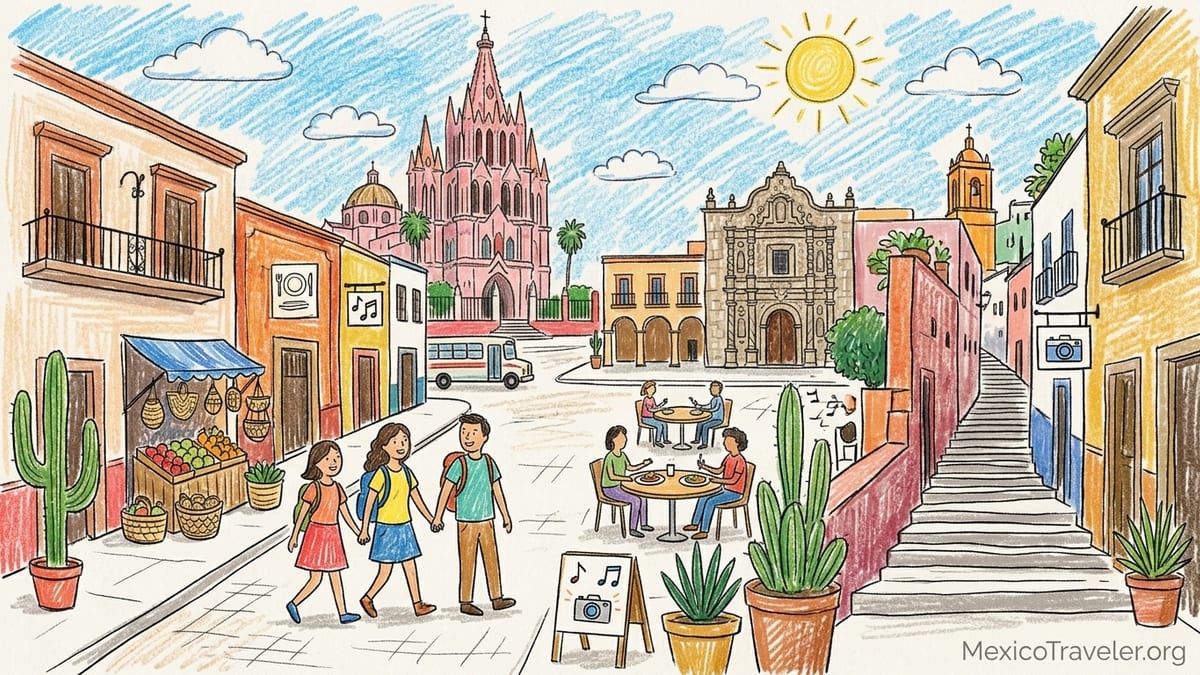
How I Pick A Colonial City Worth Returning To
When I’m deciding where to go back to in Mexico, I’m not looking for a “prettiest” winner. I’m looking for a place that performs in real life: where the historic center is walkable without feeling like a theme park, where the streets reward wandering, and where one great meal doesn’t require a spreadsheet. I also pay attention to terrain. Flat grid cities invite long, aimless loops; steep mining cities demand shoes with grip and a willingness to climb for viewpoints.
I start with the core: the main plaza and the first ten minutes after arrival. In some cities, you step out into a quiet, ordered center where you can understand the layout instantly. In others, you land in a tangle of alleys, staircases, and sudden overlooks, and it takes a full day to feel oriented. That difference matters. If I’m traveling as a couple, I want nighttime strolling, well-lit plazas, and dinner that turns into dessert and a nightcap without planning. If I’m traveling for photography, I want early morning light, dramatic elevation changes, and streets that “compose themselves.”
Finally, I check what’s verifiably current and practical: UNESCO designations when applicable, museum opening hours and ticketing practices that can change, and any major annual events that will reshape crowds and hotel availability. The best city on paper can feel like the wrong pick if you arrive during a major festival without realizing what you’ve walked into.
San Miguel de Allende: For Couples, Design Shops, And Long Evenings
I still remember arriving in San Miguel de Allende and immediately feeling the “slow down” effect. The streets around the historic core rise and fall in gentle grades, and that first walk toward the Jardín Principal feels like being guided by sound: church bells, café chatter, and the low hum of foot traffic that keeps you moving without rushing you. The historic center is UNESCO-listed as part of the Protective Town of San Miguel and the Sanctuary of Jesús Nazareno de Atotonilco, and the preservation shows in the way the center holds together as a coherent, walkable whole.
My default orientation walk starts at the Jardín Principal, then loops past the Parroquia de San Miguel Arcángel, and continues along Cuna de Allende and Correo until I can feel where the city turns quieter. The architecture here is the point: warm-toned façades, wrought-iron details, and a skyline anchored by the parish church that keeps reappearing as you turn corners. The city is very walkable, but it’s not flat. After a few hours, you notice the mild altitude and the cobblestones in your calves, which is exactly why I like it: you earn your viewpoints.
Food in San Miguel is where I linger. I come for market breakfasts, then something more polished at night. In the morning, I like a simple routine: coffee and sweet bread, then a walk that ends with something hearty. In the evening, the center is built for unplanned nights out. You can start with a mezcal, move to dinner, then keep walking until you find live music or a busy terrace. It’s social without feeling like a single-strip party zone. For art and design, San Miguel is the easiest “yes” in this list, especially if you enjoy hopping between small galleries and craft shops between long meals.
How long feels right: I don’t do San Miguel as a one-night stop anymore. Two nights is the minimum to get a full day of wandering and a full night of lingering. Three nights is ideal if you want a relaxed pace, shopping time, and a side trip to the Sanctuary of Atotonilco, which is part of the same UNESCO World Heritage inscription and makes for a very different, more contemplative half-day.
Guanajuato: The Steep, Theatrical City I Return To For Nightlife And Photography
Guanajuato hits differently the moment you arrive because the city is shaped by hills and deep, winding folds of terrain. You feel it underfoot right away: stairs that appear without warning, alleyways that narrow into corridors, and sudden openings where a plaza seems to drop into your lap. This is a UNESCO World Heritage site listed as the Historic Town of Guanajuato and Adjacent Mines, and the “mining city” character is not background context here, it’s the whole personality.
My first walk usually starts near the Teatro Juárez and the Jardín de la Unión because that area shows you Guanajuato’s theatrical side immediately. From there I like to climb into the callejones, not to check them off, but to get lost on purpose until I reach a viewpoint. The city’s signature feeling is vertical: balconies, rooflines, and stairways that turn an ordinary wander into a workout. If you love photographing cities, Guanajuato is a gift. The light changes fast as it bounces off colored walls and stone façades, and your best shots often happen when you turn around on a staircase and see the valley open behind you.
Evening life is where Guanajuato separates itself from the other colonial cities. The center stays lively late, and the social energy feels student-driven and performance-adjacent, even when there’s no formal event. If you’re choosing between Guanajuato and a calmer city like Querétaro for a romantic trip, I’d pick Guanajuato for couples who like movement: walking after dinner, music drifting from plazas, and the feeling that you could stumble into a performance. If you prefer quiet conversations and early nights, it can feel intense.
Two practical notes I always confirm before returning: the Museo de las Momias is a big draw and it is currently listed as open daily from 9:00 a.m. to 6:00 p.m., and Guanajuato’s biggest cultural calendar item, the Festival Internacional Cervantino, is scheduled for October 3 to 18, 2026. During Cervantino, the city’s personality turns up to maximum volume. That is exhilarating if you came for it, and exhausting if you didn’t.
Querétaro: The Colonial City I Use As A Clean, Easy Base
Querétaro is the city I recommend when someone says, “I want colonial architecture, but I don’t want to work for it.” Arriving feels orderly: wide streets, a center that reads clearly, and a sense that the city runs on schedules. Its historic core is UNESCO-listed as the Historic Monuments Zone of Querétaro, and what I love here is not dramatic hills or cinematic views but coherence: you can walk for hours and never feel disoriented.
My favorite way to experience Querétaro is to start in the historic center during the day, when the light is sharp on stone façades and the city’s calm confidence comes through. I like to wander between plazas and churches rather than chase one big attraction. The feel underfoot is flatter than Guanajuato, which changes everything. You can do longer loops without planning breaks, and it becomes a “walk and talk” city, perfect for traveling with a partner or friends.
Food and evening life in Querétaro lean more toward relaxed than rowdy. I return when I want a pleasant night that doesn’t turn into a 2 a.m. mission. Think: dinner, dessert, a final drink, and a long stroll back through well-lit streets. Museums and cultural sites tend to be manageable in a single day without rushing, and the city is especially good if you’re combining destinations and need a breather between more intense stops like Guanajuato or Mexico City.
How long feels right: one night is fine as a stopover, but two nights is better so you get one full day of wandering and one unhurried evening. Querétaro also works as a launchpad for day trips beyond the center, which is another reason I return even when I’ve “seen” the highlights before.
Morelia: Pink-Stone Grandeur And A City That Becomes Electric During Film Week
Morelia’s historic center feels immediately distinct because of its signature pink stone. You don’t have to be an architecture expert to notice the uniformity and the scale. UNESCO’s description emphasizes the concentration of historic buildings in that pink quarry stone, and walking through the center you feel how the city’s palette and rhythm differ from the brighter, more colorful mining towns. Morelia is a UNESCO World Heritage site, and it reads as a place built for civic grandeur: broad avenues, formal squares, and monumental façades.
Arriving, I always head toward the cathedral area first, then extend my walk along long straight streets that invite you to keep going. The terrain is friendlier than Guanajuato. It’s more about distance than elevation, which makes it perfect for travelers who want to cover a lot of ground on foot without constantly climbing. Museums are a big reason I return. One I specifically plan for is the Museo Casa Natal de Morelos, which is officially listed in Mexico’s cultural information system with a 2026 update, a small detail that matters because it signals active administration and current listings you can verify before you go.
Morelia’s evening life can be calm and elegant, but the city’s energy spikes during the Morelia International Film Festival. The festival’s own announcements list the 24th edition for October 16 to 25, 2026, with in-person screenings in Morelia and virtual screenings. If you visit during those dates, the city feels like a cultural campus: more people out late, more lines, more conversation in cafés, and a different kind of crowd than the typical weekend getaway.
How long feels right: two nights is the sweet spot if you want one day for architecture and museums and one evening to enjoy the center without rushing. If you’re visiting specifically for the film festival, I’d add extra nights because screening schedules and ticketing logistics tend to shape your days, and you’ll want buffer time for meals and walking between venues.
Puebla: The Food City I Return To When I Want Baroque Interiors And A Perfect Seasonal Dish
Puebla is a colonial city where the historic center doesn’t just look preserved, it feels lived-in at scale. It is UNESCO-listed as the Historic Centre of Puebla, and the city’s identity is tied to its role as a historic link between Mexico City and Veracruz. In practical terms, that shows up in the way Puebla feels connected: it’s a major city, not a boutique town, and the center has real daily momentum. When I arrive, I treat it like a “city city” first, then narrow in on the old core on foot.
My walking routine begins near the Zócalo and cathedral area, then aims for a Baroque interior that stops you in your tracks. Puebla rewards travelers who actually step inside churches, not just photograph façades. You get gilded altars, high drama, and that sense of layered history that the exterior alone doesn’t deliver. Architecturally, Puebla is less about steep viewpoints and more about detail: tilework, courtyards, and the way blocks repeat until you suddenly find a street that feels like a film set.
Food is Puebla’s strongest reason to return, and here I plan around seasonality. If I’m traveling in late summer, I time my return for chiles en nogada, a dish that is not just “available,” but tied to real, publicized seasonal windows. For 2026, Puebla’s own government communications have promoted a chiles en nogada season running roughly from late July into September, including a Tochimilco season announcement dated July 16, 2026 and a window given as July 24 to September 20. That kind of date specificity is exactly why Puebla can be the best colonial city in Mexico on the right week: the same streets, but a completely different menu energy.
How long feels right: two nights works well because Puebla has enough museums, interiors, and food stops to fill a full day and a half without rushing. Three nights is ideal if you want to add a food-motivated day trip to nearby towns during chile season, then return to the center for evening strolling and a late dessert run.
Zacatecas: High-Altitude Stone Drama And The Museum Pairing I Always Make Time For
Zacatecas is the city I return to when I want stone architecture that feels serious and cinematic. It’s UNESCO-listed as the Historic Centre of Zacatecas, and like Guanajuato it carries mining-town weight, but the mood is different: more open, more monumental, and often less crowded than the biggest names on travelers’ shortlists. Arriving, the altitude and the light are the first things I notice. Days can feel bright and crisp, and evenings cool off fast, which changes how you plan nighttime wandering.
My favorite way to walk Zacatecas is to start in the historic center, then build toward an elevated viewpoint. The city’s streets and squares feel designed for pauses: you walk, you stop, you look up, you take it in. This is where I slow my pace, especially if I’ve just come from a louder place like Guanajuato. Architecture here reads in stone: ornate facades, heavy textures, and that sense of permanence that makes you look twice at doorways and windows instead of scanning for the next café.
For museums, I always make time for the two Coronel institutions because they deliver very different experiences. The Museo Rafael Coronel is often described in official cultural listings as a major mask collection in an ex-convent setting, and it’s the kind of museum where the building itself is part of the draw. The Museo Pedro Coronel is a separate return-worthy stop if you enjoy broad art collections and the feeling of walking through a historic building that’s been repurposed for exhibitions. If you like art and you’re choosing between cities, Zacatecas is quietly one of the strongest picks in central-north Mexico for museum hours spent well.
How long feels right: two nights is enough to get the center, a viewpoint, and the museum pairing without rushing. Three nights is better if you’re the kind of traveler who likes to take the same sunset walk twice, once for scouting and once for photos, or if you want to build a day around museums and a calmer evening.
The Takeaway
If I had to summarize how these colonial cities differ in real life: San Miguel de Allende is my choice for couples, design-forward wandering, and long, polished evenings; Guanajuato is for steep, theatrical street life and photography, especially if you like nightlife and cultural buzz; Querétaro is the easiest base when you want walkable history without sensory overload; Morelia is for pink-stone grandeur and museum days, with an extra reason to go during its film festival dates in October 2026; Puebla is my return trip for food and Baroque interiors, especially if you can time it to chiles en nogada season; and Zacatecas is where I go when I want stone drama, altitude light, and serious museums without the constant crush of crowds.
The best “colonial city” in Mexico depends on what you want your nights to feel like, not what your photos will look like. Pick the city that matches your pace. Then give it enough nights that the historic center stops being a checklist and starts feeling like a place you actually lived, even briefly.
FAQ
Q1. Which colonial city in Mexico feels most romantic for couples?
San Miguel de Allende, because the historic center is built for slow evenings: plaza strolling, terrace dining, and easy wandering without needing a plan.
Q2. Which city is best if I want dramatic streets and viewpoints for photography?
Guanajuato, thanks to its steep alleyways, staircases, and hilltop overlooks that constantly change the angle and light.
Q3. Which colonial city is easiest for first-timers who want an uncomplicated historic center?
Querétaro is the most straightforward to navigate, with a coherent, walkable center that doesn’t require constant climbing.
Q4. Which city should I pick for museums and architecture in a calmer setting?
Morelia is an excellent choice, with a monumental historic core and multiple museums that fit naturally into a two-night stay.
Q5. When is the Festival Internacional Cervantino in Guanajuato in 2026?
It is scheduled for October 3 to 18, 2026, and it significantly increases crowds and the city’s nighttime energy.
Q6. When is the Morelia International Film Festival in 2026?
The festival has announced its 24th edition for October 16 to 25, 2026, with in-person screenings in Morelia and virtual screenings.
Q7. When is chile en nogada season in Puebla for 2026?
Official promotions in Puebla for 2026 have highlighted a window from late July into September, including an announced period of roughly July 24 through September 20 in Tochimilco.
Q8. Which cities in this guide are UNESCO World Heritage sites?
San Miguel de Allende (with Atotonilco), Guanajuato, Querétaro, Morelia, Puebla, and Zacatecas all have UNESCO World Heritage designations tied to their historic centers.
Q9. How many nights should I plan in Guanajuato if I want nightlife and daytime wandering?
Two nights works, but three nights feels ideal so you can recover from the hills, revisit viewpoints at different times of day, and still have time for museums.
Q10. If I only have time for one food-focused colonial city, which should I choose?
Puebla, especially if you can time your visit to a seasonal specialty like chiles en nogada, plus you’ll find deep menus beyond a single signature dish.