


The Riviera Maya is one of the few places on earth where you can spend the morning floating in a turquoise jungle pool and the afternoon finning through flooded caves that run for kilometers underground. Cenotes are not just pretty swimming holes; they are the region’s most distinctive natural attractions and a major reason many travelers add extra days to an itinerary in Playa del Carmen, Tulum or Puerto Morelos. This guide compares the best cenotes for open-air swimming, beginner-friendly snorkeling, family visits and advanced cavern diving, with real-world details on prices, access, facilities and when it is worth paying for a guided tour or private driver.
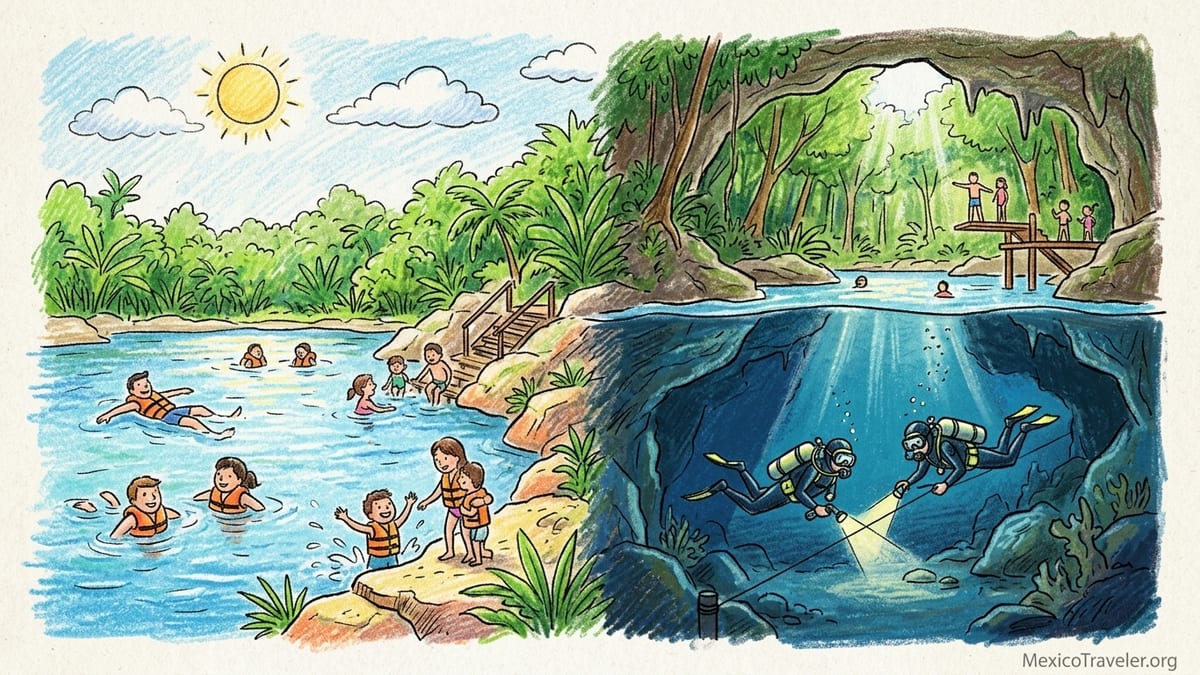
Understanding Riviera Maya Cenotes: Swimming vs Cavern Diving
Cenotes are natural sinkholes that tap into the Yucatán Peninsula’s freshwater aquifer. Around Playa del Carmen and Tulum, they range from wide open pools ringed by jungle to narrow cave openings where shafts of light cut into deep blue water. For visitors, the crucial distinction is between recreational cenotes for swimming and snorkeling at the surface and technical sites used for cavern and cave diving. Recreational cenotes typically have roped-off areas, shallow shelves and ladders, and they sell day passes at a booth beside Highway 307. Cavern and cave diving, in contrast, happens in overhead environments where a direct ascent to the surface is impossible and requires specialist gear, training and a certified guide.
If you are planning a regular day of cenote swimming or snorkeling, you will buy a standard entrance ticket at the gate, usually in Mexican pesos, and may optionally rent a life jacket or snorkel. Places such as Cenote Azul, Jardín del Edén and Cenote Cristalino on the highway south of Playa del Carmen fall into this category, as do Gran Cenote and Casa Cenote closer to Tulum. By contrast, famous cave systems like Dos Ojos and El Pit inside Dos Ojos Park are globally known dive sites used by technical diving centers. Recreational visitors can still swim and snorkel at Dos Ojos, but the more enclosed sections and the deeper passages are reserved for guided cavern or cave dives.
Cavern diving is distinct from full cave diving. Cavern routes remain in the so-called daylight zone where some natural light is visible, and they are restricted to certified divers accompanied by a qualified cavern guide who carries reels and redundant lights. Dive shops in Playa del Carmen and Tulum publish 2025–2026 cavern packages that include transport, tanks, guide and cenote fees, often around the equivalent of several thousand pesos per diver for a two-tank day in sites like Dos Ojos or Casa Cenote. If you do not already hold at least an Open Water certification and very solid buoyancy skills, you should treat cenotes as swimming and snorkeling venues only and avoid any operator that suggests otherwise.
Because cenote rules and fees change frequently, even month to month, it is prudent to treat every price in this guide as a snapshot rather than a guarantee. Places that publish tariffs, such as Dos Ojos Park, Cenote Cristalino or some larger Ruta de los Cenotes properties, are relatively predictable, but smaller family-run cenotes may adjust their cash-only gate fee when local fuel or electricity costs rise. Plan with pesos, be ready to pay a modest increase on quoted figures, and always check opening days before committing to a long taxi or rental car ride.
Open-Air Swimming Cenotes: Azul, Jardín del Edén and Cristalino
South of Playa del Carmen, a cluster of open-air cenotes sits directly off federal Highway 307 and works especially well for casual swimming and beginner snorkeling. Cenote Azul is one of the most photographed. It is a broad, shallow pool with clear blue water, rocky shelves and a few small jump spots. A recent guide that checked with local tour operators in October 2026 cites an adult entrance fee of about 180 pesos, with reduced pricing for young children. Lifeguards are not always present, but staff at the gate will typically insist on a life jacket for weaker swimmers. Most visitors arrive by rental car or taxi from Playa del Carmen, about 20 to 30 minutes in light traffic, and use the on-site parking area a short walk from the water.
Next door, Jardín del Edén (sometimes called Ponderosa) feels more like a lagoon than a pool. It is deeper, with a large open surface and underwater rock formations that appeal to snorkelers and freedivers. Travelers posting in 2026 describe gate fees in the range of roughly 150 to 200 pesos per adult and note that the cenote can be packed with local families on Sundays, when domestic visitors take advantage of resident discounts. Facilities are basic but functional, usually including toilets, simple outdoor showers and rustic platforms for sunbathing. There is limited shade at midday, so many people time their visit for early morning or late afternoon and combine Edén with a swim at Azul or Cristalino on the same ticket or the same taxi hire.
Cenote Cristalino, a few hundred meters along the same stretch of road, offers a similar open-air experience with a slightly more enclosed feel and a reputation for very clear water. Its own site and recent regional guides list adult entry around 25 United States dollars and around 15 dollars for children 5 to 12 years old, with younger children free, and published opening hours from roughly mid-morning to late afternoon on weekdays and a slightly earlier start at weekends. The peso equivalent has moved upwards with inflation in 2026, so if you are paying cash at the gate you may see a posted tariff in the high hundreds of pesos. That higher price point filters some crowds; visitors often report a quieter atmosphere here than at Azul during peak holiday weeks.
These three cenotes are easy to reach without a tour, and for a couple or a small group staying in Playa del Carmen, a do-it-yourself day is usually cheaper than an organized excursion. A taxi from central Playa del Carmen to the Azul / Edén / Cristalino entrance cluster can run in the region of 300 to 400 pesos one way in 2026, depending on negotiation and fuel prices, and many drivers will wait for a small extra fee. Because distances between the three gates are walkable, a realistic plan is to pick one as your base, swim for several hours, then stroll along the shoulder of Highway 307 to the others if you still have energy. Be alert to traffic and heat, carry water, and remember that return taxis may be less frequent later in the day; arranging a pickup time with your original driver can be worth the extra cost.
Cave and Semi-Cave Cenotes: Dos Ojos, Gran Cenote and Casa Cenote
Travelers looking for a taste of Riviera Maya’s underground worlds usually end up at Dos Ojos, Gran Cenote or Casa Cenote. All three support both casual visitors and more specialized diving operations, but they feel very different on arrival. Dos Ojos, about 20 minutes north of Tulum, sits inside a private park accessed from Highway 307 via a limestone track. Recent price tables compiled in September 2026 from the park’s own booking catalog list a basic swimming and snorkeling ticket at around 400 pesos per adult, with higher tiers at around 800 and 1,200 pesos for guided packages that include the Bat Cave and additional cenotes inside the park such as Nicte-Ha and Jaguar. These higher-priced options bundle a guide and safety gear and are good value for travelers who want structured cavern snorkeling without arranging a separate tour company.
Gran Cenote, a short drive out of Tulum on the road toward Coba, is arguably the area’s most famous commercial cenote. It combines open pools with vaulted cave sections, platforms and boardwalks. Unlike Dos Ojos, its owners do not consistently publish a tariff, but independent 2026 cenote price trackers report adult gate fees around 1,000 pesos, with life jackets and snorkel sets rented separately. That makes Gran Cenote one of the more expensive single-cenote visits in the region, but its proximity to Tulum, strong marketing and striking cave formations keep it busy most days of the year. Visitors should expect crowds from mid-morning onwards, especially when cruise excursions and tour buses arrive.
Casa Cenote, also known as Cenote Manatí, lies between Playa del Carmen and Tulum near the Caribbean coast. It is a long, mangrove-lined channel of fresh water with gentle current and several access points. For swimmers and snorkelers, the appeal is the combination of clear water, varied depths and the chance to drift along and watch small fish shelter in the roots. A 2026 cenote fee comparison collating official and reported prices describes a mixed picture here: around 150 pesos for simple lagoon access quoted in some materials associated with the property, but traveler reports of higher gate prices closer to 500 pesos that include on-site snorkel experiences. Because the management occasionally revises its pricing model, it is wise to check the current rate with a local dive shop or hotel concierge within a day or two of your visit.
These three cenotes all support cavern and, in strict conditions with qualified guides, cave diving. Dos Ojos is particularly significant, forming part of a massive system documented by cave explorers and featuring famous dive routes such as the Barbie Line and Bat Cave. Dive centers in Tulum and Playa del Carmen sell half-day or full-day cavern packages here; one prominent 2025–2026 cavern operator’s brochure shows pricing where the diver pays a core fee to the shop for gear, tanks, guide and transport, plus occasional surcharges around the equivalent of 30 United States dollars at certain cenotes that levy extra dive fees. Recreational swimmers will not encounter these deeper zones, but you will see dive teams gearing up at separate platforms and following clearly marked lines into the cavern.
Beginner-Friendly Snorkeling and Family Swimming
First-time cenote visitors usually want clear water, easy entries and shallow areas where children or non-confident swimmers can stand. Among the Riviera Maya sites, Cenote Azul and Cenote Cristalino south of Playa del Carmen and Gran Cenote near Tulum check these boxes, provided you time your visit. Azul is especially good for families because much of the cenote is waist- or chest-deep, with natural rock steps and quieter side pools separated from the main jumping ledge. Parents on recent trips highlight that life jackets are either strongly recommended or effectively mandatory for young children, and some report staff turning away very small kids without flotation, so budget extra pesos for rentals if you are not bringing your own.
Cristalino appeals to slightly older kids and adults who want both swimming and a bit of gentle adventure. There are short cliff jumps and a cave-like overhang, but also ladders, ropes and platforms that allow for easy exits. Its higher foreigner pricing can be a deterrent for large groups, yet that cost often translates into more space and a calmer vibe inside. Families with strollers should be aware that all three highway cenotes have uneven paths and stone steps; one Playa del Carmen discussion in 2026 mentions a 10 to 15 minute walk from the parking area at Azul along a rough path. If mobility is an issue, consider Gran Cenote instead, where wooden walkways and shorter distances from parking to water make logistics easier, even if steps are still involved.
Casa Cenote is one of the best introductory snorkel spots if you are comfortable in deeper water. Here you will not have a broad shallow shelf, but most guided snorkel experiences include a life jacket and sometimes a short safety briefing before you enter the mangrove channel. Local operators often bundle Casa Cenote with extra stops, such as a nearby beach or another cenote inland, and they emphasize its relative protection from ocean swell. For children who love marine life but are intimidated by waves or the open sea, floating along Casa Cenote’s still waters while watching for small fish and, with luck, the occasional cormorant diving past can be less overwhelming than a reef snorkel by boat.
Regardless of which cenote you choose, it is essential to distinguish family-friendly surface activities from any form of overhead penetration. Cenote parks sometimes offer add-on adventures marketed as “cavern tours” or “underground river experiences” that involve snorkeling through low-roofed tunnels or enclosed sections. While some of these remain within the daylight zone and are relatively benign, anyone with claustrophobia, poor swimming skills or very young children may be more comfortable staying in open air sections. If a staff member suggests a route where you cannot clearly see an open ceiling above you at all times, or where a direct vertical ascent to the surface is impossible, treat it as a specialized activity and ask about guides, group size and exit points before agreeing.
Advanced Cavern Diving and Technical Cenote Experiences
For certified divers, the Riviera Maya cenotes are among the world’s premier cavern sites. Dos Ojos, The Pit, Tajma Ha on the highway between Playa del Carmen and Tulum, and several cenotes on the inland Ruta de los Cenotes are staples of local dive-shop schedules. Cavern tours, as defined by training agencies, keep divers within sight of natural light, limit penetration distance and require single-file movement along a continuous guideline laid by the guide. Operators in Playa del Carmen and Tulum publish 2025–2026 rate sheets that bundle two dives, tanks, weights, a professional cavern guide and round-trip transport from town, sometimes in the range of several hundred United States dollars for a day that might include, for example, one dive at Dos Ojos and another at Casa Cenote or Tajma Ha.
Technical cave dives go further and often deeper. They require at minimum a full cave-diver certification and experience with multiple cylinders, decompression gases and navigation in complex line systems. Cenotes like The Pit inside Dos Ojos Park reach depths over 40 meters and extend into extensive flooded passages. While casual travelers will see signs for these sites, access is controlled and usually only possible through specialized dive centers that coordinate park permissions and pay extra dive surcharges on top of regular gate fees. One 2025–2026 cavern diving brochure circulating among local shops notes that certain cenotes add an additional fee equivalent to around 30 United States dollars per diver that the guide must collect and remit, a meaningful factor when budgeting a multi-day cave-diving trip.
Non-divers occasionally ask whether a quick “intro to cenote diving” is possible on holiday. In practice, reputable operators will not take uncertified guests into overhead environments. Discover Scuba programs sometimes take place in open cenotes with direct vertical access to the surface, but these are effectively confined-water dives and are treated cautiously. If you are curious about cenote diving but lack training, the safest path is to complete at least an Open Water course in the ocean or a pool first, then consider a specialty or cavern orientation under the supervision of a recognized training agency. Any vendor promising a same-day cenote cave experience to a non-diver should be avoided.
Photographers and videographers should also be aware of cenote rules. Many parks charge a separate fee for the use of action cameras or professional-looking rigs, sometimes approaching the equivalent of tens of United States dollars, payable in cash at the gate. A recent dive-site profile for Dos Ojos, updated in October 2026, notes that gate fees are typically cash-only and that a distinct camera fee is collected for anyone bringing in a waterproof camera, even if you are just snorkeling. Professional flash photography in enclosed sections is often restricted out of respect for wildlife and other visitors, and tripods are rarely allowed. Always ask the gate attendants before unpacking a large housing or drone, and be prepared to leave bulky gear in your vehicle if policies are strict.
Practical Logistics: Transport, Facilities, Crowds and Conditions
Riviera Maya cenotes cluster along Highway 307 between Cancún and Tulum and along the inland Ruta de los Cenotes near Puerto Morelos. From Playa del Carmen, open-air cenotes like Azul, Jardín del Edén and Cristalino are about 20 to 30 minutes by car, while Casa Cenote and Dos Ojos are closer to 40 to 60 minutes depending on traffic. From Tulum, Gran Cenote sits about 10 to 15 minutes inland, Dos Ojos around 20 minutes north, and Casa Cenote roughly 25 to 35 minutes up the coast road. These estimates assume a private car; shared vans and tour buses take longer due to pickups and stops.
Self-driving remains the most flexible option for travelers comfortable with Mexican roads. Highway 307 is a multi-lane paved road, but side tracks into parks like Dos Ojos or some Ruta de los Cenotes properties can be rough limestone with potholes. Most standard rental sedans manage these slowly without issue, though after heavy rain shallow pools form in the potholes. Parking at major cenotes is usually free and within a few minutes’ walk of the entrance, but larger sites can have overflow lots that extend this to a 10 or 15 minute walk. Facilities vary: many gates have at least basic toilets, cold-water showers and simple changing areas, along with small snack stands selling drinks and chips. Credit cards are increasingly accepted at larger, better-known cenotes such as Dos Ojos Park and some Ruta de los Cenotes adventure centers, but a significant number remain cash-only or charge card surcharges, so carrying enough pesos for entrance, lockers and life-jacket rentals is essential.
Taxis and private drivers are convenient but can be expensive for longer distances. In 2026, travelers report taxi quotes in the several-hundred-peso range for a one-way trip from central Playa del Carmen to highway cenotes and substantially more for private return arrangements or full-day hires that include multiple stops. If you are planning to visit two or three cenotes in one day without a rental car, hiring a private driver through a reputable local company or your hotel can make sense financially when split among three or four people, particularly once you account for waiting time and the difficulty of hailing return taxis from remote gates.
Water clarity is one of the cenotes’ main draws and usually remains excellent because the pools are fed by underground rivers rather than surface runoff. However, very heavy rain can lower visibility temporarily, especially at open-air sites where falling organic material clouds the water. Mangrove-fringed cenotes such as Casa Cenote also respond to tides and coastal conditions, and visibility can be slightly lower during strong onshore winds. If you wake up to torrential rain, consider switching your cenote plans to the following morning or choosing a more cave-like site where the overhead environment offers some shelter from debris. Tour companies often adjust their itineraries on the fly for this reason.
Crowds are a bigger issue than water clarity. Well-known cenotes like Gran Cenote, Azul, Dos Ojos and Casa Cenote can become very busy between late morning and mid-afternoon, particularly during Christmas, Easter and summer vacation periods when both international visitors and local families arrive. One Playa del Carmen cenote discussion in 2026 summarizes the pattern simply: the more accessible the cenote, the more people. To dodge the worst of the crowds, aim to arrive shortly after opening or during the last two hours before closing, avoiding Sundays if possible. Some cenotes cap numbers or operate informal time slots at peak times, which can work in your favor by keeping the water calmer once inside.
Self-Guided Visits vs Guided Multi-Cenote Tours
Choosing between do-it-yourself cenote visits and guided tours depends on how many people are in your group, which cenotes you want to see and whether you already have equipment. For travelers staying in Playa del Carmen who only want to visit the Highway 307 open-air trio of Azul, Jardín del Edén and Cristalino, a self-guided day often costs less. A couple might pay a combined taxi fare in the low hundreds of pesos each direction and individual gate fees at each cenote, still ending well under the per-person price of many organized excursions that include lunch and transport. Bringing your own snorkel mask and a compact microfiber towel further reduces add-on costs.
Guided tours start to make financial sense when you want to cover greater distances, include more expensive cenotes such as Dos Ojos or Gran Cenote, or avoid the hassle of driving and parking. A typical small-group cenote tour marketed in 2025–2026 might charge the equivalent of around 150 to 200 United States dollars per person for a full day visiting three cenotes with hotel pickup from Playa del Carmen or Tulum, lunch, a licensed guide and all entrance, life-jacket and snorkel fees included. When you factor in the individual gate fees listed for sites like Dos Ojos (often 400 pesos or more per person even at the basic tier), Gran Cenote (reported near 1,000 pesos) and Casa Cenote or a Ruta de los Cenotes adventure park, the bundled price can be competitive, especially for solo travelers or couples without rental cars.
Private cenote drivers and custom tours offer another middle ground. Companies based in Cancún, Puerto Morelos and Playa del Carmen advertise full-day private transfers where you select two or three cenotes and perhaps an archaeological site like Tulum or Coba, paying entrance fees separately. The vehicle and driver cost a flat fee that can look steep for two people but becomes attractive for a family or group of four or five. This model is particularly useful for photographers who want flexibility with timing and light or for visitors with mobility needs who may require more time at each stop than a group tour allows.
When comparing self-guided and guided options, ask detailed questions about what is included. Some budget tours advertise attractive prices but then charge extra at each gate for lockers, life jackets or the right to bring a camera. Others include only one expensive cenote and fill out the day with a beach club or shopping stop. Reputable operators will specify the cenotes, approximate time at each, whether snorkeling equipment is provided and whether you will share the van with other groups. As a rule of thumb, self-guided makes the most sense for two or three open-air cenotes clustered close together, while guided or private tours are worth the money for longer itineraries, remote Ruta de los Cenotes properties or any day that includes cavern snorkeling or diving, where having an experienced guide significantly improves safety and interpretation.
Smart Cenote Combinations from Playa del Carmen and Tulum
Organizing your cenote days by geography reduces time on the road and taxi costs. From Playa del Carmen, one of the simplest combinations is a full day along Highway 307 visiting Cenote Azul, Jardín del Edén and Cenote Cristalino. All three lie within a very short stretch of road, and you can comfortably swim at two and at least walk through the third between mid-morning and late afternoon. Start at Azul right when it opens to enjoy the pools before crowds arrive, move to Jardín del Edén for deeper snorkeling around lunchtime and finish at Cristalino in the later afternoon when the light softens and tour groups thin out.
A second Playa del Carmen combination pairs Casa Cenote with one inland cenote reached on the same highway south toward Tulum. For example, you might book a morning snorkel at Casa Cenote through a local operator that includes transport from Playa and then ask to be dropped on the return leg at the Azul / Edén / Cristalino cluster, arranging your own taxi home. This approach lets you experience both a coastal mangrove cenote and a classic open-air jungle pool in one day without zigzagging across the region.
From Tulum, a classic two-cenote pairing is Gran Cenote and Cenote Calavera, both on the road toward Coba and only minutes apart by car or taxi. Add a third stop at Zacil-Ha or at a quieter family-run cenote further along if time and energy allow. Another strong Tulum day links Dos Ojos Park with Casa Cenote. You might spend the morning snorkeling at Dos Ojos on a basic ticket or guided Bat Cave circuit, have lunch at the park or at roadside stands and then continue north to Casa Cenote for a late-afternoon drift along the mangroves. This combination maximizes variety while keeping all driving on the same axis along Highway 307.
The inland Ruta de los Cenotes, accessed from Puerto Morelos, lends itself to adventure-park combinations. Several large properties along this road package ziplines, ATV circuits and multiple cenotes into a single ticket, sometimes priced around the equivalent of dozens of United States dollars per person with lunch and transport from the coast included. Travelers staying in Cancún’s Hotel Zone or the northern Riviera Maya often dedicate one full day to a Ruta de los Cenotes park and another to a more relaxed open-air cenote nearer their hotel, such as Azul or a resort-affiliated cenote on private land. Whatever combination you choose, avoid itineraries that bounce you back and forth between far-flung cenotes in a single day; the time in traffic will erode the very sense of calm and immersion that makes cenotes special.
The Takeaway
Riviera Maya’s cenotes are not a single attraction but a network of radically different experiences, from shallow sunlit pools perfect for toddlers’ first snorkel to labyrinthine cave systems that challenge elite divers. Open-air cenotes like Azul, Jardín del Edén and Cristalino deliver classic jungle swimming within easy reach of Playa del Carmen, while semi-cave sites such as Dos Ojos, Gran Cenote and Casa Cenote show off the limestone underworld that makes this coastline unique. Understanding which cenotes suit swimming, which support casual snorkeling and which are reserved for trained cavern or cave divers allows you to choose days that align with your comfort level and budget.
Costs and conditions change quickly in 2026, but a thoughtful plan that groups nearby cenotes, arrives early or late to dodge crowds and carries enough pesos for cash-only gates will go a long way. Self-guided visits shine when you are targeting easily clustered sites near Playa del Carmen or Tulum and already have basic gear, while guided multi-cenote tours or private drivers come into their own for longer routes, cavern-focused days or trips that combine cenotes with archaeological sites. Respect local rules about life jackets, sunscreen and photography, and treat cenotes as the fragile freshwater windows they are rather than just another swimming pool.
Whether you float quietly beneath jungle vines at Azul, follow a guide’s lamp through the blue corridors of Dos Ojos or drift past mangroves at Casa Cenote, cenotes are likely to become the anchor memories of your Riviera Maya trip. Plan with realistic travel times, conservative expectations about your own abilities and an openness to the region’s rhythms, and you will find that a day spent in these limestone pools can feel as rich and immersive as any visit to Chichén Itzá or the Tulum ruins.
FAQ
Q1. Do I need to book cenotes in advance or can I just show up?
Most open-air swimming cenotes such as Azul, Jardín del Edén and Cristalino operate on a first-come, first-served basis and do not require advance reservations for regular entry. However, structured experiences like guided cavern snorkeling at Dos Ojos or multi-cenote tours from Playa del Carmen and Tulum almost always require advance booking, especially in high season, to secure guide availability and transport.
Q2. Are life jackets mandatory at Riviera Maya cenotes?
Policies vary by cenote. Some, particularly family-focused sites and adventure parks, require all swimmers to wear life jackets, while others only insist for children or weak swimmers. In practice, staff at busy cenotes often strongly recommend or effectively require flotation for anyone leaving the shallow shelves. If you prefer not to rent on-site, bring a compact travel vest that meets safety standards and ask at the gate whether it is acceptable.
Q3. Can I pay cenote entrance fees by card, or do I need cash?
Several larger cenotes and parks, including Dos Ojos and some Ruta de los Cenotes adventure centers, now accept card payments, but many smaller or family-run cenotes remain cash-only. Power or network outages can also knock out card terminals temporarily. It is safest to carry enough pesos to cover all expected entrance fees, parking or locker charges and camera fees for the day, treating any opportunity to pay by card as a bonus rather than a guarantee.
Q4. How much should I budget for a typical cenote day?
Budget conscious travelers visiting one or two open-air cenotes near Playa del Carmen or Tulum on their own might spend the equivalent of a few hundred pesos per person in entrance fees plus transport costs, making for an affordable half-day. Adding more expensive cenotes like Dos Ojos or Gran Cenote, renting snorkel gear and life jackets and relying on taxis instead of a rental car can easily push a full-day outing into the range of several thousand pesos per person. Guided multi-cenote tours that include transport, lunch and all gate fees tend to sit in the mid to high hundreds of United States dollars for two people.
Q5. What is the difference between cenote swimming, cavern snorkeling and cavern diving?
Cenote swimming refers to surface-level bathing in designated areas, often with life jackets, where you can always make a direct vertical ascent to the open air. Cavern snorkeling typically involves following a guide through partially roofed sections that remain within the daylight zone but may feel more enclosed and require stronger swimming skills. Cavern diving is a scuba activity in overhead environments for already certified divers, following strict rules about distance from open water, guidelines and equipment redundancy under the supervision of a qualified cavern guide.
Q6. Are cenotes safe for young children and non-swimmers?
Many cenotes have shallow shelves, ladders and relatively calm water, and they welcome families with children. Safety depends largely on supervision and flotation. Non-swimmers and young kids should always wear properly fitted life jackets and stay within arm’s reach of an adult. Open-air cenotes like Azul and parts of Gran Cenote are well suited to cautious families, while deeper sites, jump platforms and cavern sections are better reserved for confident swimmers and teenagers.
Q7. What should I wear and bring for a cenote visit?
Wear a comfortable swimsuit, quick-drying clothing and sandals or water shoes that can handle wet rock and dirt paths. Bring a towel, reef-safe sunscreen or a long-sleeved rash guard, a hat, water and small snacks where allowed. If you have your own snorkel mask, pack it to avoid rental lines and fees. A dry bag is useful for keeping phones and valuables safe, and some visitors prefer to bring a lightweight lock for shared lockers, though major cenotes usually have their own locking systems.
Q8. Are there wildlife or environmental concerns at cenotes?
Cenotes are freshwater ecosystems, and you may encounter small fish, birds and occasionally harmless freshwater turtles. Mosquitoes can be present in jungle surroundings, particularly at dawn and dusk, so a non-aerosol insect repellent is helpful around the parking and path areas. To protect the fragile water system, cenotes typically ask visitors to shower before entering, prohibit regular sunscreen and block the use of glass containers. Following these rules helps preserve water clarity and the health of the aquifer.
Q9. Can I bring a camera or drone to cenotes?
Most cenotes allow personal cameras and phones in waterproof cases, but many charge an extra fee for action cameras or professional-looking equipment, collected at the gate. Flash and tripods may be restricted inside cave sections so as not to disturb wildlife or other guests. Drone use is tightly controlled or outright banned at many sites for safety and privacy reasons; always check current policies at the entrance and be ready to leave drones and bulky gear in your vehicle if requested.
Q10. When is the best time of day and year to visit cenotes?
The clearest, quietest conditions are usually found right after opening, before tour buses and day trips arrive, or in the last couple of hours before closing. Weekdays outside of major Mexican and international holiday periods tend to be less crowded. Water temperatures in cenotes stay relatively stable year-round, often cooler than the sea, so the main seasonal differences are crowd levels and surface weather. During the rainy season, heavy downpours can temporarily affect visibility and comfort at open-air cenotes, making more enclosed or cave-style sites attractive alternatives.