

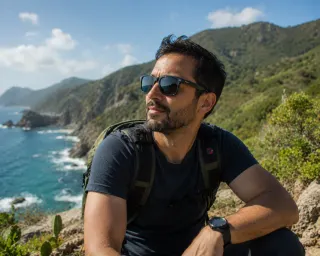
I’ve traveled across Mexico in the way most people actually do it: a mix of big-city days, long bus hauls, short domestic flights, beach weeks that ran longer than planned, and colonial stopovers that I originally thought I’d rush through. What surprised me most was not the food (it was as good as everyone promised) or the ruins (they are genuinely world-class), but how different Mexico feels depending on where you land, how you move, and what season you pick. This guide is written from what I personally did on the ground and then layered with the newest, most practical research so you can plan the same kind of cross-country trip without learning everything the hard way.
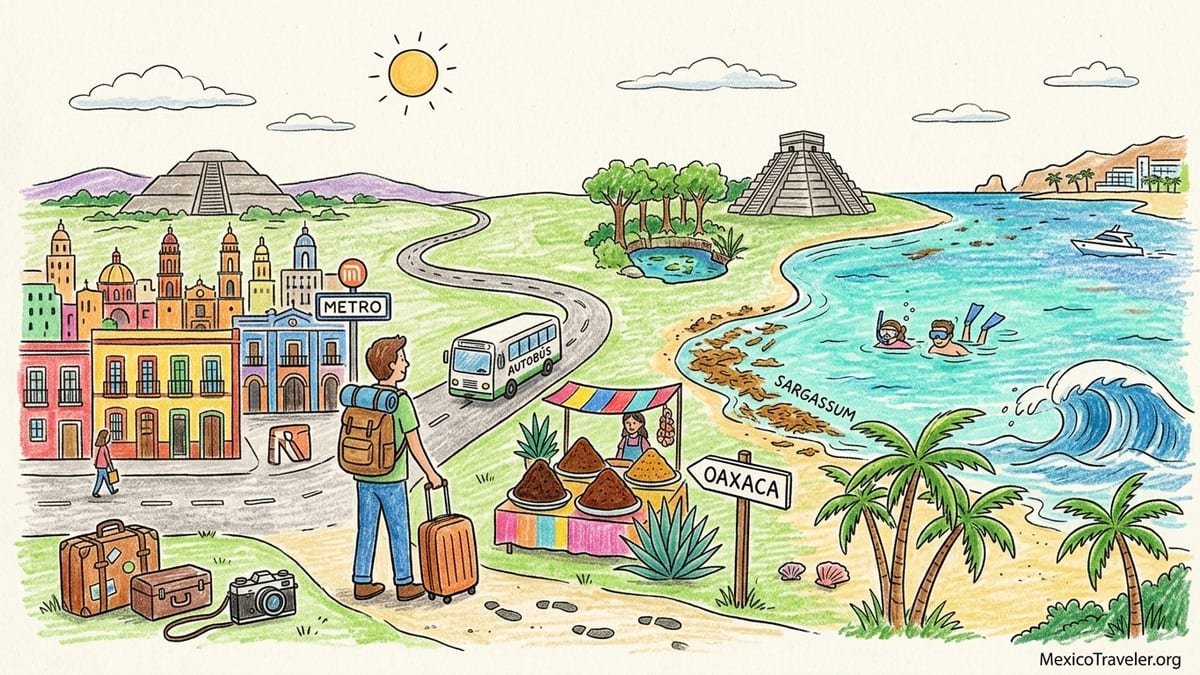
How I Actually Traveled Mexico (And What I’d Do Differently Next Time)
I built my Mexico route around a simple idea: start in the country’s biggest hub, then spiral outward using the easiest connections. I began in Mexico City and central Mexico, moved south to Oaxaca, crossed to the Yucatán Peninsula and the Mexican Caribbean, jumped to Pacific beach towns, flew up to Baja and Los Cabos, and stitched it together with colonial-city stops that made the long distances feel worth it. The core lesson I learned is that Mexico rewards travelers who plan transportation first and attractions second. A “short” distance on a map can still turn into a draining travel day if roads are winding, weather is intense, or departures are limited.
I used Mexico City International Airport (AICM) as my main entry and exit point because it connects to almost everywhere. From there, I mixed the Metro and ride-hailing in the capital, took intercity buses when they were comfortable and time-competitive, and booked domestic flights when the alternative would have eaten an entire day. The travel style that worked best was: 4 to 6 nights per region, then move. Anything faster felt like I was constantly packing, constantly checking out, and never fully settling into the rhythm of a place.
Two expectation-changers stand out. First, crowds: the places you think will be “quiet” because they’re not trending can still feel busy if you’re there on weekends, during school holidays, or when cruise and tour buses arrive. Second, comfort: Mexico can be extremely easy to travel, but it is not always effortless. Heat, humidity, high altitude, and travel times can compound quickly. My best days were the ones where I planned one anchor activity and left the rest loose.
What I’d do differently: I’d plan my Mexico City days with altitude in mind, I’d avoid stacking early-morning tours after late dinners in Oaxaca, and I’d treat the Caribbean as two separate trips: one for beach-swimming conditions (which can be disrupted by sargassum), and one for inland experiences like cenotes and ruins that are great even when the shoreline is not.
Mexico City And Central Mexico: Big-City Logistics That Felt Surprisingly Easy
Mexico City challenged my assumptions immediately. Online, it gets framed as chaotic and intimidating. In person, it felt like a world capital with pockets of calm and a transit system that can be genuinely practical if you stay in the right neighborhoods. I based myself in Roma Norte and Condesa because I wanted walkability, coffee shops, parks, and easy ride-hail pickups. Those areas felt like the easiest landing pad, especially when I was adjusting to altitude and re-learning how to navigate in Spanish at full speed.
The Metro was my workhorse for daylight exploring, and it was one of the best values in the country. The official Mexico City tourism site states a Metro ride costs 5 pesos per trip. That tiny fare made it feel almost silly to default to cars for everything, especially when traffic can be punishing. I still used ride-hailing at night or when I was carrying bags, but in the daytime the Metro made the city feel smaller and more manageable than I expected.
I took a day trip to Teotihuacan and it became one of those “this is why I travel” moments, but it also taught me how rules can change the experience. Climbing the Pyramid of the Sun is not allowed, which is important to know if you’re picturing that classic photo from years ago. In my case, it shifted the day toward walking the Avenue of the Dead slowly, focusing on murals, museums, and viewpoints instead of racing to a summit. INAH has also emphasized visitor behavior like respecting signage and not climbing structures not designated for that purpose, and the official Teotihuacan visitor page explicitly notes the climb restriction.
Crowds were real, especially when I arrived later than I meant to. The way I’d plan it now is simple: go early, bring sun protection, and treat it like an outdoor endurance walk, not a quick attraction. The site is wide, exposed, and brighter than your camera makes it look. In Mexico City itself, the city’s intensity became part of the appeal: street food culture, museums, leafy neighborhoods, and late dinners that drift into mezcal bars. What felt unexpectedly easy was the day-to-day structure: coffee, a park loop, a museum, tacos, and a Metro ride home.
Oaxaca: The Most Rewarding “Slow” Stop I Didn’t Want To Rush
Oaxaca was where Mexico started to feel less like a series of highlights and more like a lived-in travel rhythm. I stayed close enough to the historic center that I could walk to markets and dinner, then retreat to quieter streets when the crowds tightened. The center is compact, and that compactness made my days feel full without feeling rushed: a morning of walking, a long lunch, a late-afternoon museum or church, then a dinner that turned into a mezcal tasting almost by accident.
The meals were not just “good,” they were grounding. Oaxaca is one of those destinations where the internet tells you what to eat, but the best experiences come when you follow what’s busy and what smells right. I learned quickly that one mole plate can be an entire meal, and that I needed to pace myself if I wanted to keep trying things. I expected to be constantly hunting the “best” version of everything. Instead, I found the best moments came from repetition: the same coffee spot, the same late-night snack stand, the same market stall where the vendor started recognizing me.
Oaxaca also taught me to respect travel time fatigue. Even when the trip is smooth on paper, moving day can knock your energy down more than you predict, especially if you arrive in the heat and immediately start walking. My best Oaxaca day was not the one packed with activities. It was the one where I let the city’s pace set my schedule: a long market loop, a shaded break, then a sunset walk when the temperature finally softened.
If you’re planning Oaxaca as part of a larger Mexico itinerary, build in margin. This is not a “two nights and go” stop unless you’re strictly checking boxes. I arrived thinking I’d keep it tight. I left thinking I could have stayed a full week, especially if I’d added nearby villages, mezcal country, or a more relaxed day structure.
Yucatán And The Mexican Caribbean: Beach Reality, Sargassum, And The Best Backup Plans
The Yucatán Peninsula was the part of my trip where expectations collided most with reality, and it’s exactly why you need both lived experience and up-to-date planning info. I flew into Cancun International Airport because it’s the region’s most connected gateway, then split time between the Riviera Maya and inland Yucatán. My “beach picture” was clear water and long swims. The reality was more variable: some days were spectacular, and some days the shoreline was affected by seaweed and surf conditions that made swimming less appealing.
Sargassum is the big factor you can’t ignore when planning the Mexican Caribbean. In 2026, Mexico’s federal government publicly discussed major funding and strategy for sargassum attention and management in Quintana Roo, which tells you how significant it has become. Quintana Roo also has ongoing monitoring and operational bulletins through Mexico’s Navy oceanographic efforts, referencing sargassum groups and biomass near the coast. What that meant for me as a traveler is simple: I learned to plan “water days” as flexible, and I stopped tying my happiness to a single beach.
My best workaround was shifting the trip’s center of gravity inland when the shoreline wasn’t ideal. Cenotes became the reliable win: you still get that swimming experience, but with consistent water clarity and none of the beach uncertainty. I also leaned into archaeological sites as morning anchors, then reserved afternoons for whatever conditions allowed. One crucial update for planners: Tulum’s access rules and fees have shifted recently. Mexico’s federal government announced a new approach in mid-July 2026 connected to “Plan Tulum Renace,” including free entry to Parque del Jaguar and new tariffs for access to the archaeological zone and protected natural area, with foreign visitors priced differently than nationals. In practice, that means you should expect an integrated, rule-driven entry process rather than the casual “just show up” approach that older blog posts describe.
Chichen Itza was the opposite kind of lesson: it’s iconic, it’s worth it, and it’s crowded for a reason. INAH’s own listing notes that beyond the admission fee, there is also an extraordinary fee from the Government of the State of Yucatan. That layered-fee structure is the kind of detail that can surprise travelers who budget only for a single ticket. My personal tip is to treat these big sites like early-morning experiences: arrive before heat and tour groups hit peak, bring water, and let the site impress you without trying to “beat it” in record time.
Pacific Coast Beach Destinations: Gorgeous, But Plan Around Heat And Transit
On the Pacific side, the vibe changed immediately. The light felt harsher, afternoons felt hotter, and the ocean energy felt different from the Caribbean. I visited Pacific beach destinations as a reset between cities, but I learned quickly that a “beach town” can still be physically demanding. Heat can peak hard, shade can be limited, and a day that looks relaxed on Instagram can turn into an early retreat to air conditioning if you underestimate the sun.
What I loved most about the Pacific was the sense of space. Even when there were crowds, the coastline didn’t feel as hemmed-in as some Caribbean stretches. Meals were simpler and often built around what was fresh and easy. I also noticed how much travel time matters on this side of the country. Some routes involve mountains and winding roads that slow everything down, so even a few hundred kilometers can feel like a long haul.
I set my schedule around the climate: early beach time, a shaded long lunch, then another walk when the sun eased. That rhythm made the coast feel restorative rather than exhausting. The most unexpectedly enjoyable moments were the unplanned ones: a small local place for grilled seafood, a sunset walk that turned into a casual chat with other travelers, and the feeling that I didn’t need a checklist to have a “good day.”
Planning note, researched layer: hurricane season affects both coasts and timing matters. NOAA states the Atlantic hurricane season officially runs June 1 to November 30, while the eastern Pacific hurricane season runs May 15 to November 30. The U.S. Embassy in Mexico has also reminded travelers that Mexico’s hurricane season is from May through November, with most storms developing between July and October. For Pacific planning, that means late summer and early fall can bring disruption risk, especially if your itinerary relies on ferries, small airports, or tight connections.
Baja And Los Cabos: The “Easy” Luxury Gateway That Can Still Surprise You
Baja and Los Cabos felt like the most straightforward region logistically, mostly because air connectivity makes it easy to drop in for a shorter stretch. I used Los Cabos International Airport as my entry point for this leg. The overall feel was different from the rest of Mexico: more resort energy, more English in tourist zones, and a pace that can be relaxing if you lean into it. It also felt like a place where budgeting can swing dramatically depending on whether you stay in a resort corridor or base yourself in a more local-feeling area.
What surprised me was how quickly costs could pile up if I wasn’t intentional. Beach days are “free” in theory, but meals, taxis, and convenience spending can add up fast in the most touristed zones. I also learned to plan my beach expectations around conditions. Some beaches are made for swimming, some are better for looking than entering, and signage matters. When I slowed down enough to pay attention to those realities, the area became far more enjoyable and less frustrating.
One practical research note for nature travelers: Cabo Pulmo is one of the region’s most celebrated marine areas, and access is managed through Mexico’s protected-areas agency, CONANP. For any national-park style day in Mexico, I now assume there may be formal access rules and fees, and I check the official protected-area pages before I go. That mindset prevents the common frustration of arriving and realizing you need a specific entry process, proof, or payment method.
Another practical note: domestic flight baggage rules can catch you off guard, especially if you assume “a carry-on is always included.” Aeromexico’s official baggage information states that for domestic flights within Mexico, the Light fare does not include carry-on baggage. Even if you don’t fly Aeromexico, this is the kind of fare-family detail that now exists across airlines. I traveled with a simple setup and still had to pay close attention to fare types so a cheap ticket didn’t become a pricey one after add-ons.
Colonial Cities I Genuinely Visited: The Stops That Made Mexico Feel Layered
Colonial cities were the connective tissue of my trip. They were also the places that most improved my understanding of Mexico as more than beaches and mega-capitals. I planned them as 2 to 4-night breaks that offered walkable days, cooler evening routines, and a cultural pace that felt different from resort zones and big-city rush. These stops were where I most enjoyed doing “ordinary” travel: long breakfasts, afternoon museum windows, and evening strolls that ended when I stumbled into a busy plaza.
My rule became: in colonial cities, stay central. Being able to walk home after dinner changes the entire feel of the trip, and it reduces the friction of negotiating rides late at night. I stayed in neighborhoods that let me step out into life quickly: plazas, mercados, cafes, and historic streets that are best experienced slowly. These were also the places where I noticed how climate can shift within Mexico. Even within a few travel days, I went from warm coastal humidity to cooler evenings that made me glad I packed a light layer.
What felt unexpectedly crowded in colonial hubs was weekends. Domestic tourism is powerful in Mexico, and popular cities can fill up fast around holidays, festivals, and school breaks. I learned to book hotels earlier than I thought I needed, especially when my dates landed on Friday and Saturday nights. The payoff was huge: waking up in the center and starting the day on foot made everything feel richer and less stressful.
Researched layer: if your colonial-city plan includes major archaeological or heritage sites, check current rules before you go and assume some older “travel hacks” are outdated. INAH site management continues to emphasize conservation behavior and can restrict climbing or access depending on preservation needs and crowd control. In Teotihuacan, for example, official INAH materials and the site’s visitor information state climbing the Pyramid of the Sun is not allowed, which changes how you structure your visit and your expectations for photos.
The Takeaway
Mexico rewarded me most when I planned for realism rather than perfection. The country is not one trip, it’s many trips stitched together: altitude and megacity logistics in Mexico City, deep cultural immersion in Oaxaca, variable beach conditions in the Mexican Caribbean, heat and distance management on the Pacific, and a very different, high-comfort travel style in Los Cabos and Baja. The better I got at respecting transport time, climate, and crowds, the more “effortless” Mexico started to feel.
If you want a cross-country Mexico itinerary that feels doable, my biggest advice is to treat hubs as anchors. Fly into a major airport, stay long enough to settle in, then move with intention. Build backup plans for the Caribbean that don’t rely on perfect beach days. Start ruins early. Assume rules can change. And remember that Mexico’s best moments are often not the ones you can pre-book, but the ones you leave space to notice.
I went to Mexico expecting highlights. I left appreciating systems: how the Metro makes Mexico City navigable, how regional food cultures shape your day, how seasonal weather affects everything, and how a single rule change at a major site can shift the entire experience. That is what makes Mexico such a powerful country to travel across, and why it pays to plan like a traveler, not like an internet itinerary.
FAQ
Q1. What are the current entry requirements for Mexico for U.S. travelers?
In general, U.S. travelers need a valid passport and must complete Mexico’s entry process with the FMM or the newer digital form used at airports; always confirm the latest rules before departure.
Q2. Do I still need to fill out a paper FMM tourist card when flying into Mexico?
Mexico’s immigration authority has moved toward generating a digital form for foreigners entering by air at international airports, which reduces the need for the older paper process in many cases.
Q3. When is hurricane season in Mexico, and which coasts are affected?
Mexico can be affected on both sides: the Atlantic season is officially June 1 to November 30, and the eastern Pacific season is May 15 to November 30, with higher risk in late summer and early fall.
Q4. How bad is sargassum on the Riviera Maya right now?
Sargassum varies week to week and beach to beach; Mexico has active monitoring and management efforts in Quintana Roo, so check current local conditions and build cenotes and inland plans into your itinerary.
Q5. Can you climb the pyramids at Teotihuacan?
Climbing rules have changed over time, and Teotihuacan’s official visitor information states that climbing the Pyramid of the Sun is not allowed, so plan your visit around walking and viewpoints instead.
Q6. Are Chichen Itza ticket costs just one fee?
No, the official INAH listing notes there is an admission fee and also an additional extraordinary fee charged by the Government of the State of Yucatan, so budget for layered charges.
Q7. What is the Mexico City Metro fare, and is it worth using?
The official Mexico City tourism site lists a 5 peso fare per trip, and in my experience it’s absolutely worth using in the daytime to save time and money versus traffic.
Q8. What’s the biggest planning mistake for a Mexico cross-country trip?
Underestimating travel days. Mexico is large, and comfort depends on choosing the right mix of flights, buses, and longer stays instead of racing through too many regions.
Q9. Are domestic flight baggage rules consistent across Mexico?
They can vary by airline and fare type. For example, Aeromexico’s own policy notes that its Light domestic fare does not include carry-on baggage, so always check fare inclusions.
Q10. What’s the best way to plan the Mexican Caribbean if beach conditions are unpredictable?
Split your trip mindset: treat beaches as opportunistic, but plan “guaranteed wins” like cenotes, ruins, and early-morning excursions so your days still feel great even if the shore is messy.